

More about the history of Erdalssetra

The history of Erdalssetra goes far back in time. Remains of Stone Age tools have been found just east of the Vesledalsbreen glacier, at Austdalsvatnet. This indicates that hunting took place in this area more than 6,000 years ago. At that time, the Jostedalsbreen glacier had melted, and the easiest route here was through Erdalen and Vesledalen.
Archaeological excavations and finds show that there were several settlements in Oppstryn during the Bronze Age – more than 3,500 years ago. Pollen samples indicate that grazing animals were present in the summer farm valley at that time.
The oldest remains of summer farm buildings at Erdalssetra are dated to the 13th century.
In 1898, the summer farm valley was reorganized. Tjellaug and Greidung received Vesledalssetra, while the other farms in Erdalen received Erdalssetra. A wattle fence/stone wall was erected to separate the different summer farm enclosures.
Reorganization of the Summer Farm Enclosures
On August 6, 1892, all the landowners in Erdalen gathered for a meeting regarding the reorganization of the summer farm enclosures. After the meeting, an inspection of the area was carried out, and the reorganization court concluded that the valley used for summer farms should be divided into two separate enclosures.
Before this, the entire summer farm valley had been a shared enclosure for all the farms in Erdalen. The farms Tjellaug and Greidung had their summer farm buildings at Heimesetra (Erdalssetra), while most of the holdings at Berge, Rygg, and Erdal had their summer farm buildings at Vesledalssetra.
Because the head of the reorganization court was occupied with other business, the case had to be postponed. On July 25, 1898, the court convened again in the house of Thor Anthonsen Greidung. An inspection of the area was carried out the same day, followed by several days of court proceedings at the same location.
The reorganization court decided that Vesledalssetra would be the summer farm for the farms Tjellaug and Greidung, and Erdalssetra would serve the other farms in Erdalen. Twenty farmers and two local representatives were present during the proceedings.
The boundary line between the summer farms, and between Erdalssetra and Greidung, was precisely determined, as were the obligations to maintain fences. The summer farm buildings also had to change ownership.
The following exchange of summer farm buildings was agreed upon:
The Nedsterygg holding for the Lassebruket holding at Greidung.
The Akslunbruket holding in Erdal for Nigard at Tjellaug.
The Haraldbruket holding at Berge for the Segestadbruket holding at Greidung.
The Larsbruket holding in Erdal for the Oppigardbruket holding at Tjellaug.
The Martinsbruket holding in Erdal for holdings 3 and 4 at Greidung.
Some of the farmers had to pay a financial adjustment.
The reorganization court consisted of A. Myklebust (chair), A. M. Lunde, and S. K. Aarnes, and the protocol was signed on August 2, 1898.
Source: Reorganization Protocol
A Brief Overview of Summer Farm Life
Many farmers used Erdalssetra as their summer farm. Some hired a milkmaid together, while others had a daughter or son who could milk the cows at the summer farm. Many started at the age of 12–13 years.
The summer farm girls or boys went to the farm each afternoon around 4–5 o’clock. They gathered the cows at the summer farm buildings, milked them, and placed the milk in a cooling stream. Some had a barn where they kept the cows.
They slept a few hours in the summer farm building before getting up to milk again. Then they collected all the milk in a bucket and carried it home on their backs.
The milkmaids stayed at the summer farm all summer. They milked the cows in the evening and morning. After breakfast, they separated the milk into cream and skimmed milk. The cream was left to sour in a cream container. After about a week, the sour cream was collected and taken home in a bucket.
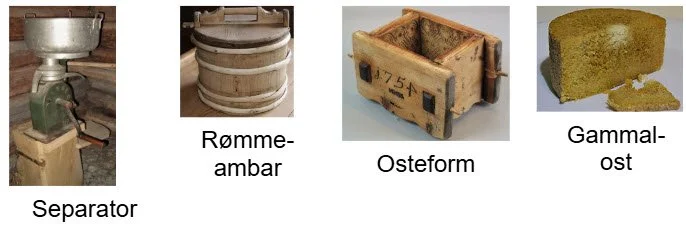
From the skimmed milk they made gammalost and mysebrøm. They used the mysebrøm as a drink with porridge. They also made white cheese and brown cheese.
After Erdal Dairy was established in 1920, the farmers changed their production. The dairy operated only during the winter season, and over time there was less summer milk.
Loppeset was the most commonly used resting place along the path to the summer farm. Here the dairy maids and boys gathered both on their way up to the summer farm and on their way home. The unity was strong, and they had a lot of fun together. Now, not many of those who experienced this time are still alive.
In the mid-1950s, the summer farming at Erdalssetra came to an end.
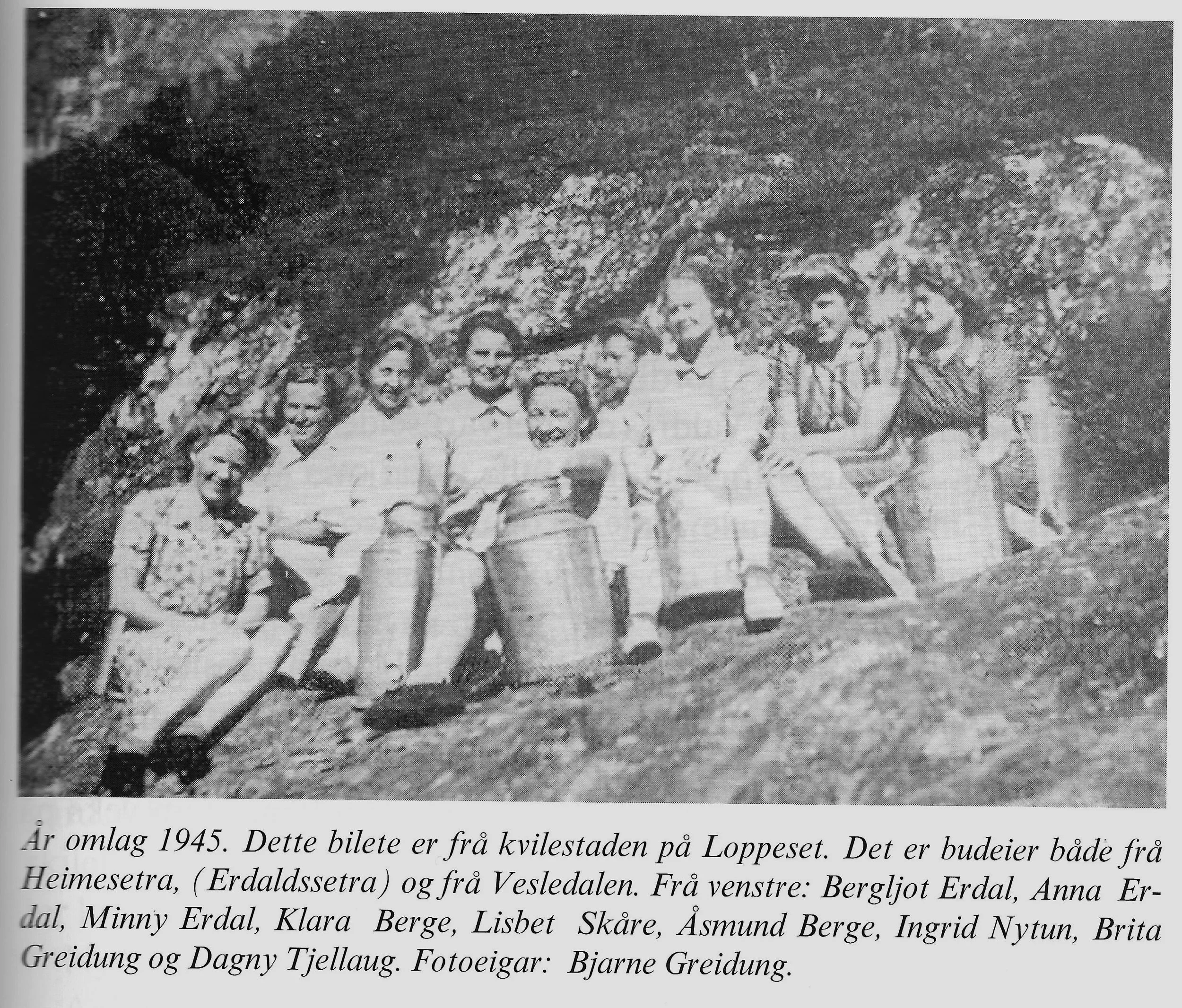
The picture is taken from the book “Setrar i Oppstryn og Nedstryn” by Kjell Råd.
Registered Cultural Heritage at Erdalssetra
Stone Age Finds
There is reason to believe that Stone Age men and women walked in this area more than 6,000 years ago. Remains of artefacts from the Early Stone Age have been found in the high mountains near Austdalsvatnet, just east of Vesledalsbreen.
The materials that have been found are diabase from Stakaldeneset in Flora and Siggjo rhyolite from Bømlo. Both of these places had quarries for a long time. There, raw materials were taken out for making stone axes (diabase) and arrowheads, knives, and scrapers (rhyolite).
This shows that there was traffic through Strynedalen in prehistoric times (Randers 1986). The shortest distance from the head of the fjord to Austdalsvatnet is in fact through Erdalen. We know that Jostedalsbreen had melted away during the period 7,500–6,000 years before present (Nesje and Kvamme 1991).
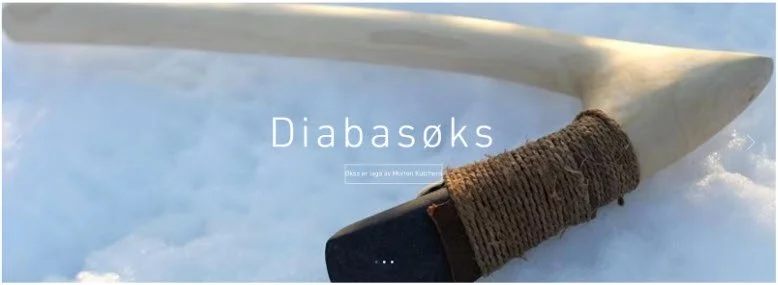
A reconstruction of a diabase axe made by Morten Kutchera
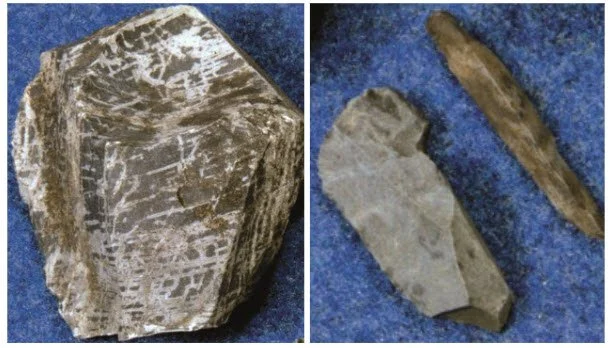
Siggjorhyolitt
Dwellings from ancient times
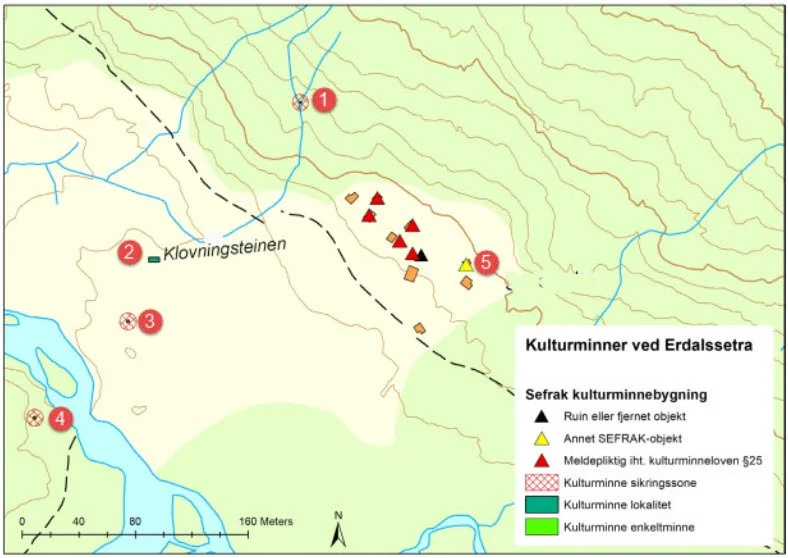
Map showing cultural heritage sites and cultural heritage buildings at Erdalssetra.
Source: GeoNorge.
May be a cup-marked stone?
Stone with an overhang. Discovery of a brownish soil layer up to 25 cm thick with charcoal fragments just beneath the turf. Not dated.
Three stones with an overhang. Discovery of a charcoal layer up to 15 cm thick just beneath the turf. Charcoal under one of the stones has been dated to the 1400s.
Stone with an overhang. Discovery of charcoal dated to the Early Iron Age.
A stone shelter that has been restored in more recent times.
Similar finds have been made at a rock shelter in Leitekroken, near the river, and beneath two rock shelters at Hesthammaren.
For several thousand years, people have travelled through the summer-farm valley. In earlier times it was hunting and trapping that drew them here; later it was also herding of livestock and summer-farm activities.
Stones with overhangs and rock shelters (rock walls with overhangs) were in ancient times used as dwellings/overnight shelters and as places to seek protection in bad weather.
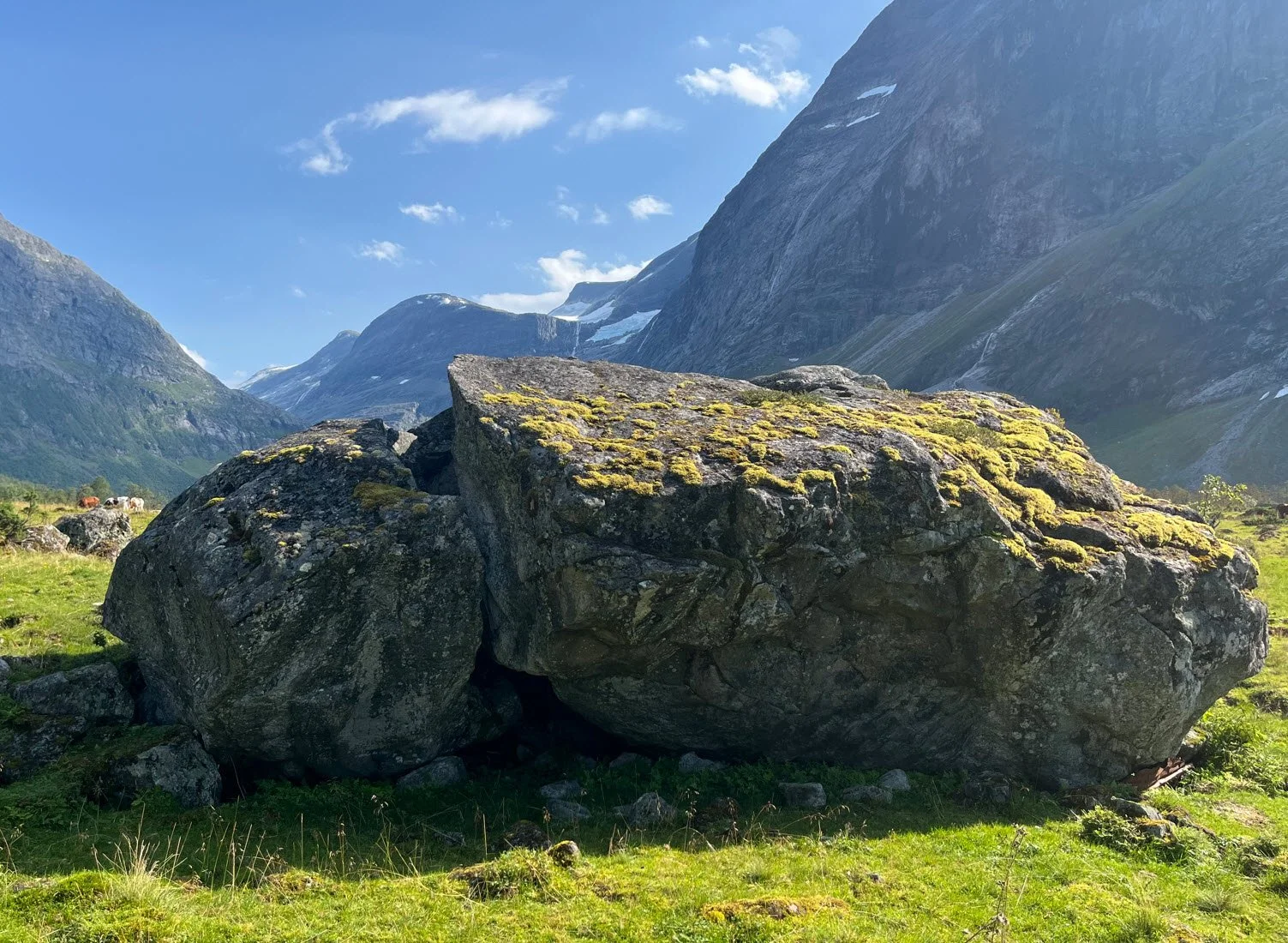
Here lies Klovningesteinen, cultural heritage site no. 2 on the map above. The stone has an overhang (rock shelter) and is registered as an ancient dwelling site.
The stone is located on the pasture between the summer farm huts and the river, approximately 200 meters west of the cluster of buildings at the summer farm. It is a stone block about 7 meters long with an overhang facing north. Directly beneath the turf is a brownish soil layer up to 25 cm thick containing charcoal fragments (Kvamme & Randers 1982: 34).
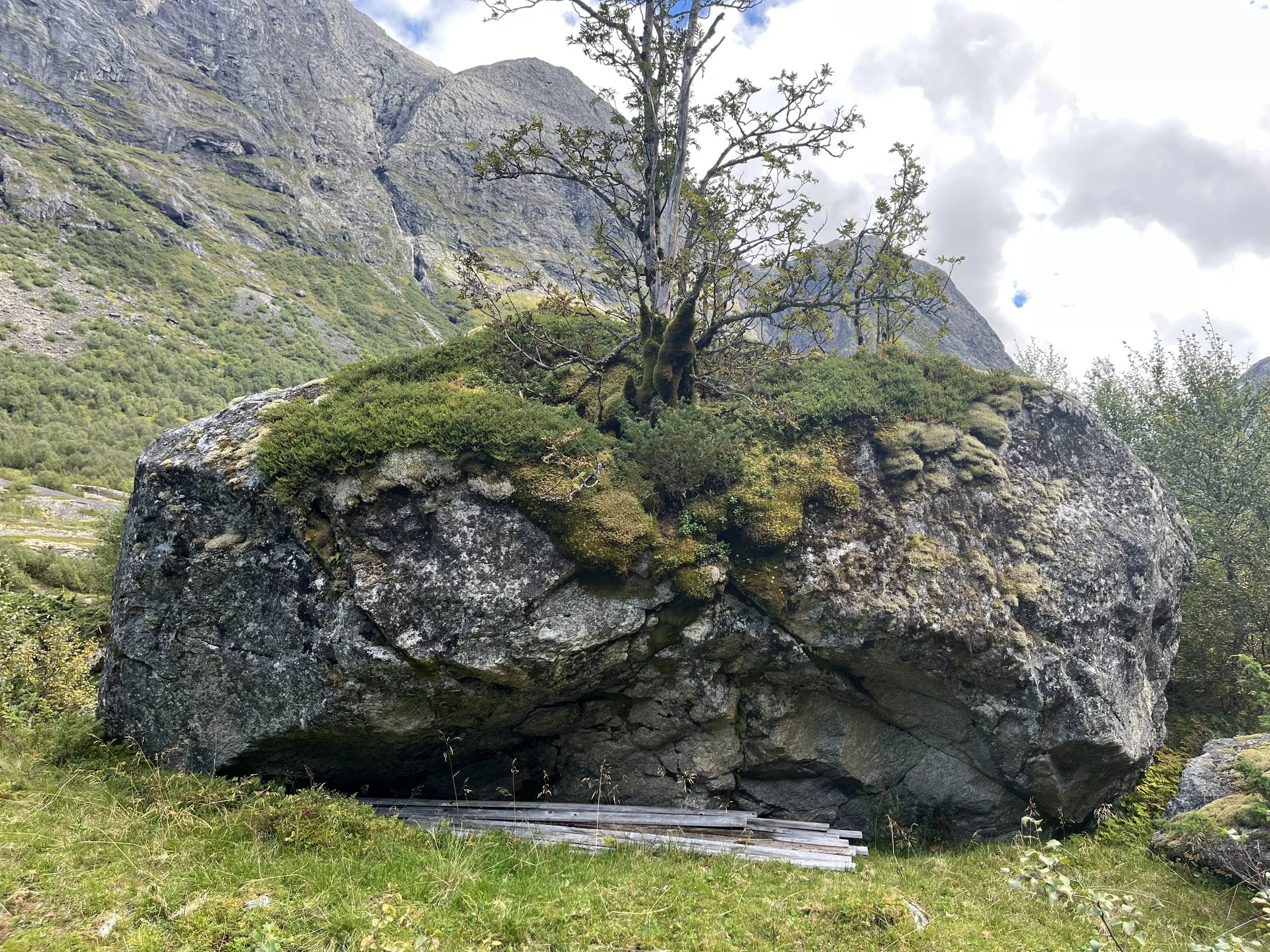
This stone with an overhang is located at the lower part of the summer farm pasture by the river. It is one of three rock shelters in this area that have been used as dwelling sites. A C14 dating shows the year 1465 with an uncertainty of ±55 years. The stones are marked as site 3 on the map of cultural heritage at Erdalssetra.
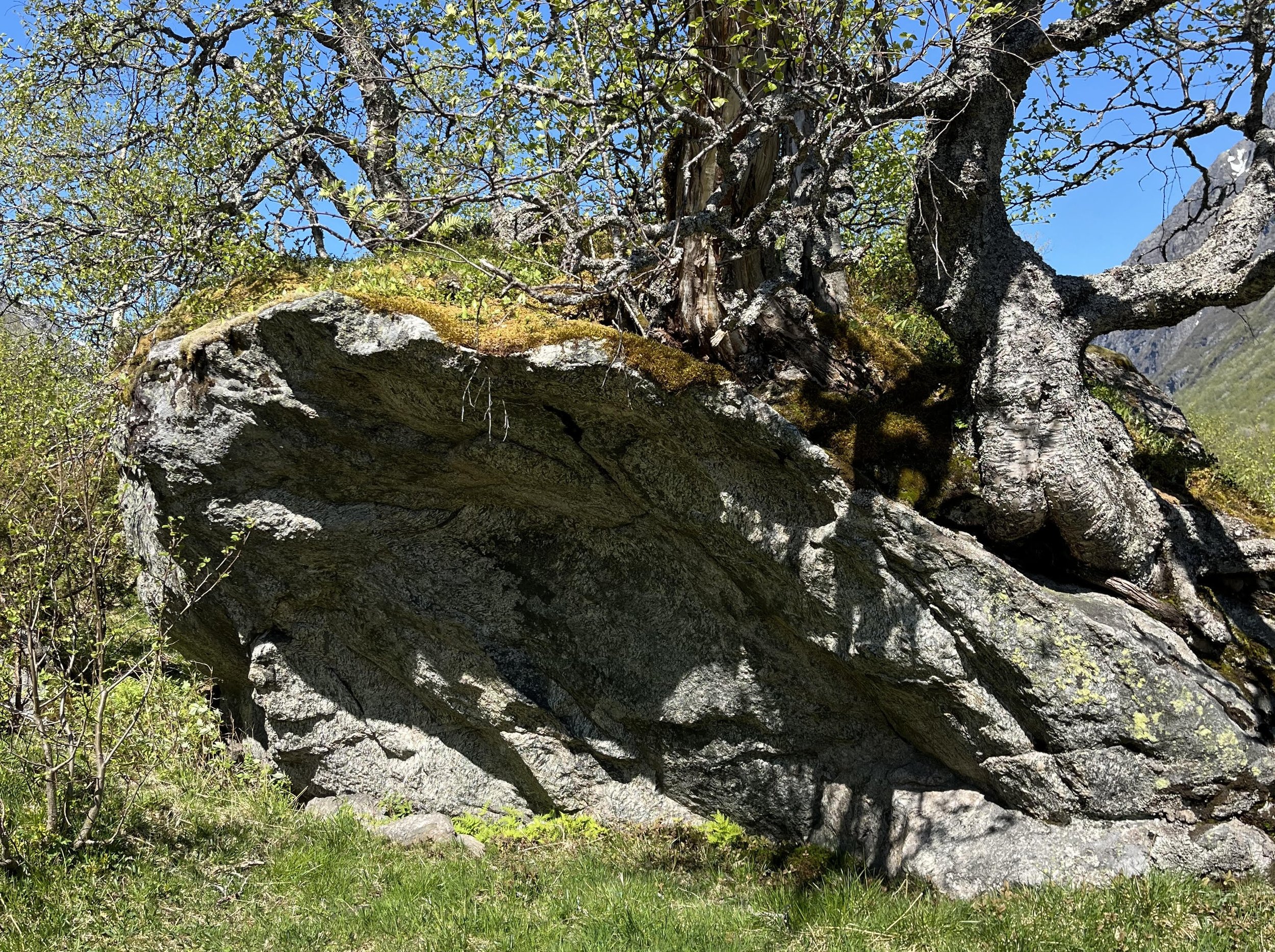
This stone with an overhang is located on the south side of the river just outside the bridge. The stone is marked as cultural heritage site number 4 on the map above.
Studies show that the stone has been used as a dwelling site all the way back to the Early Iron Age (500 BCE – 0).
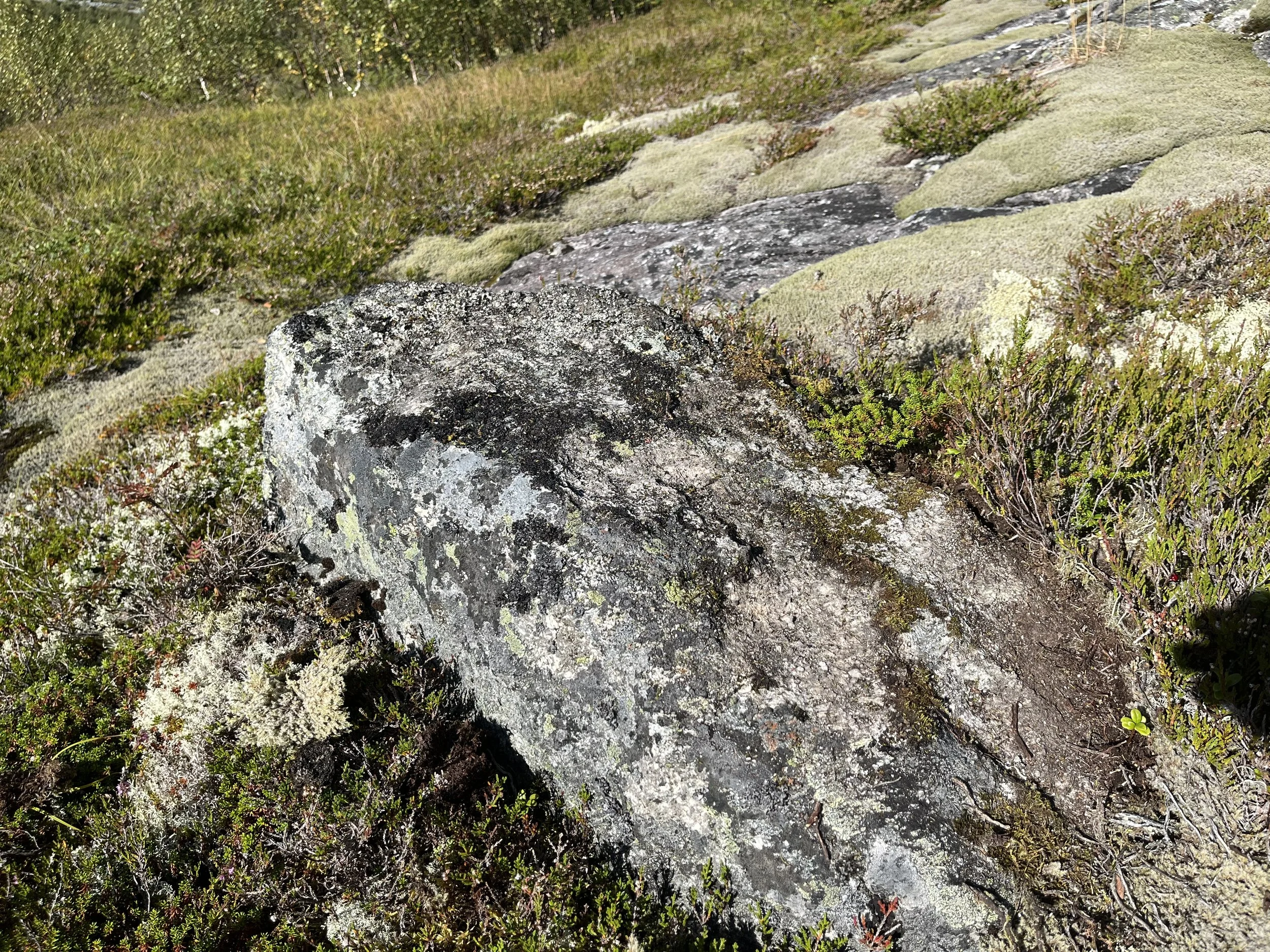
Questionable cup-marked stone (sacrificial stone):
The stone is located between two small streams that join just below the stone.
Description: The stone measures approximately 2 × 1½ m, is ½ m high, and flat on top. On the northwest side there is a small depression, 3½ cm in diameter and 1½ cm deep. It is somewhat rough and relatively small (Kvamme & Randers 1981: 35).
See the map above, marked as site 1.
Development of the Cultural Landscape
Through the research project DYLAN, a collaboration between universities in Norway, many pollen samples have been taken from the area around Erdalssetra. The pollen samples can provide information about the development of the cultural landscape, and the results show that the summer farm has been used as pasture for livestock since the Bronze Age, more than 3,000 years ago. At that time, the climate was milder than today.
Excavations in Mykjedalane at Hjelle in the summer of 1994 show that there were already permanent farmers living there around 4,000 years ago.
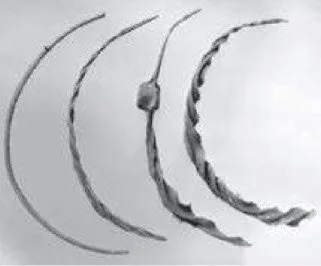
This Bronze Age burial find from Erdal shows that people lived here at that time, around 4,000 years ago.
Photo: University Museum, University of Bergen (UiB).
Cold Period
Between 300 and 800 CE, there was a colder climate across Europe, and pollen samples show a tendency for the cultural landscape in the summer-farm valley to become overgrown.
Upswing
During the Viking Age (790–1066 CE), the climate improved, and more livestock were kept at Erdalssetra. The cultural landscape developed into what it is today. At Erdalssetra, just below the summer-farm huts as they stand now, there is a house foundation dated to 1260–1390 CE.
Sources
Kulturminnesok.no
Erdalen og Sunndalen — bruk av beiteressurser i mer enn to tusen år, NIBIO Report 8, no. 139, 2022
Internet
Text: Asbjørn Berge, 2025
Photos: Marit and Asbjørn Berge