


Hike to Heimste Botnevatnet
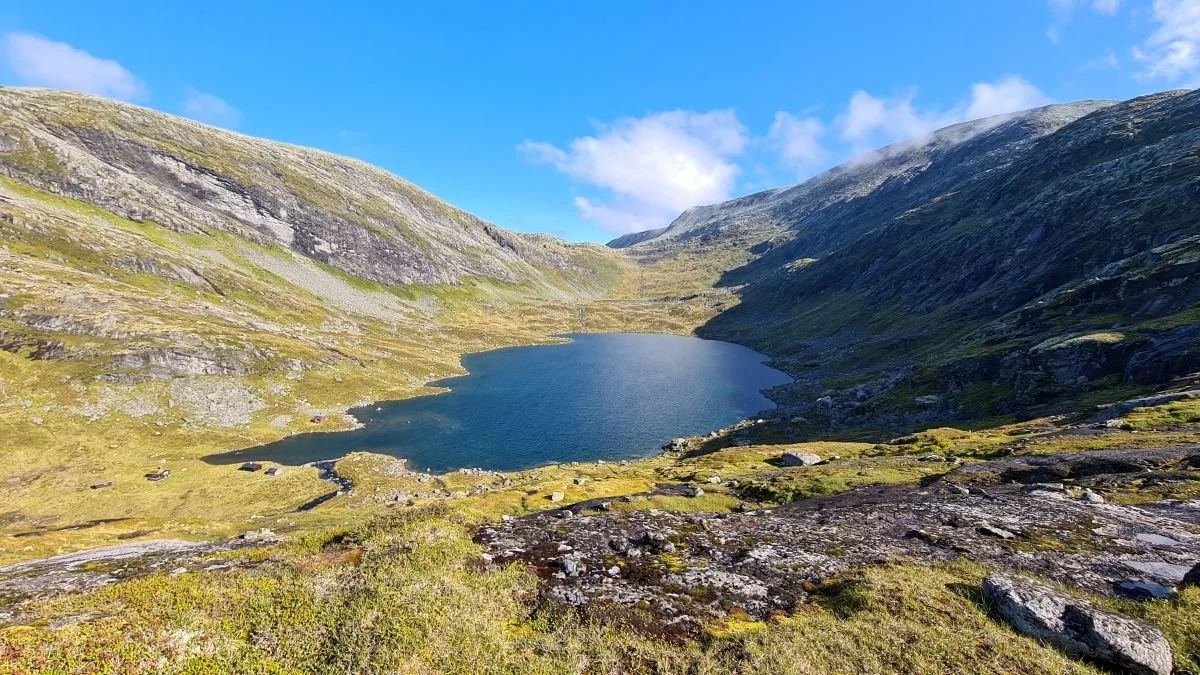
Heimste Botnevatnet
Heimste Botnevatnet is located near the end of Furedalen. It is an idyllic mountain lake situated at 841 metres above sea level. In recent years, a few cabins have been built in a beautiful location at the lower end of the lake.
On the way up through Furedalen, you pass Furesetra. Summer farming here ended in 1947, but before that time the mountain pasture was full of life every summer. Nine farmers used the summer farm.
Today, only two summer farm cabins remain, and only one farmer still has cows grazing in the valley.
Difficulty: Moderate. The trail is easy to follow and is in good condition.
Distance:
2.9 km one way from the end of the forest road to Heimste Botnevatnet
2.0 km one way to Furesetra
Elevation gain:
540 metres to Heimste Botnevatnet
360 metres to Furesetra
Duration: Approximately 4.5 hours return trip to Heimste Botnevatnet
Season: Spring to autumn
Parking: Parking is available at the car park at the end of the forest road.
Note: There is no mobile phone coverage along the hike.
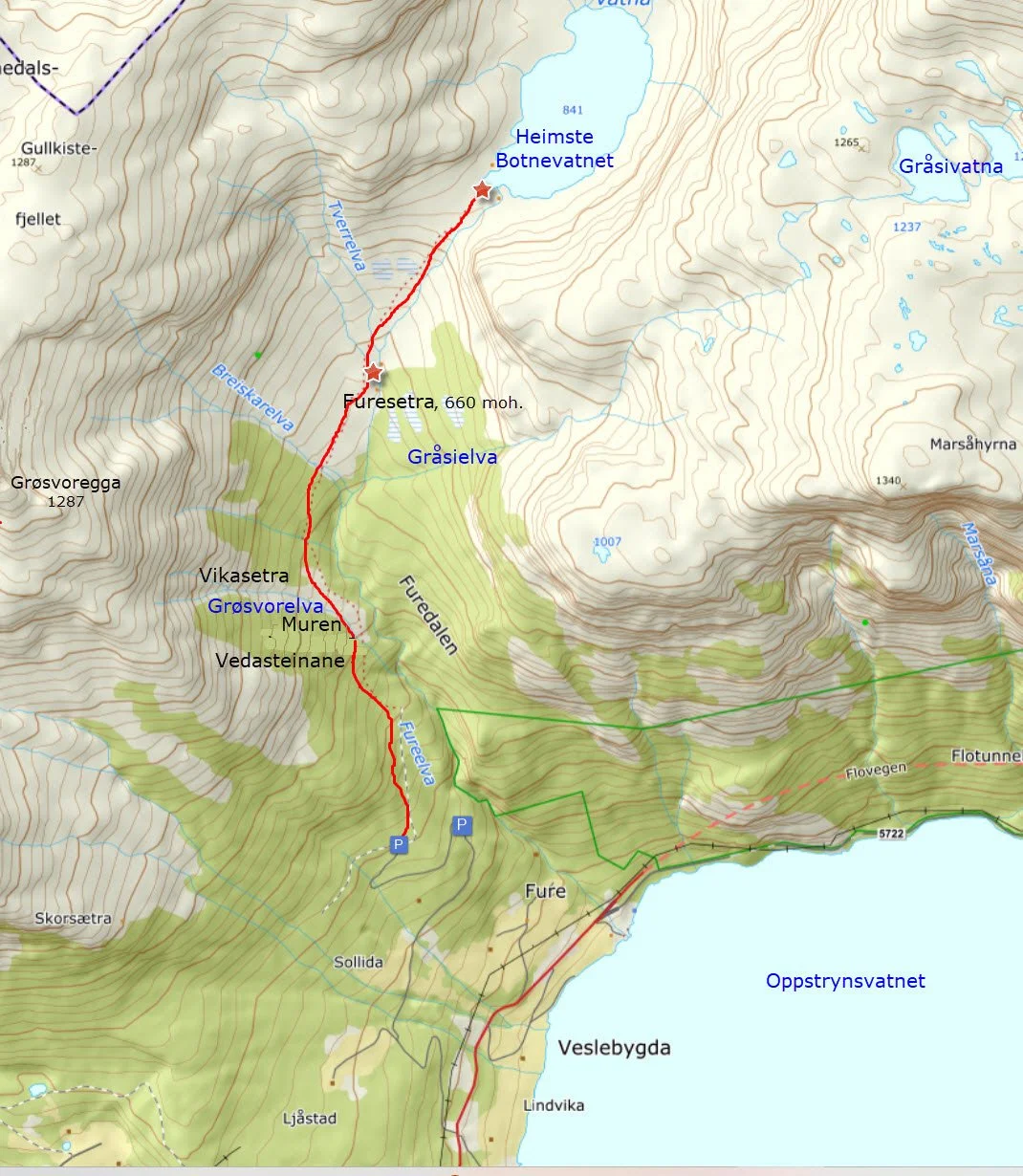
Hiking Description
When you arrive by car to Veslebygda, turn off from Flovegen and follow the farm road to Sollida. From Sollida, you can continue along the forest road for approximately 600 metres uphill. Parking is available at the spot shown in the picture below.
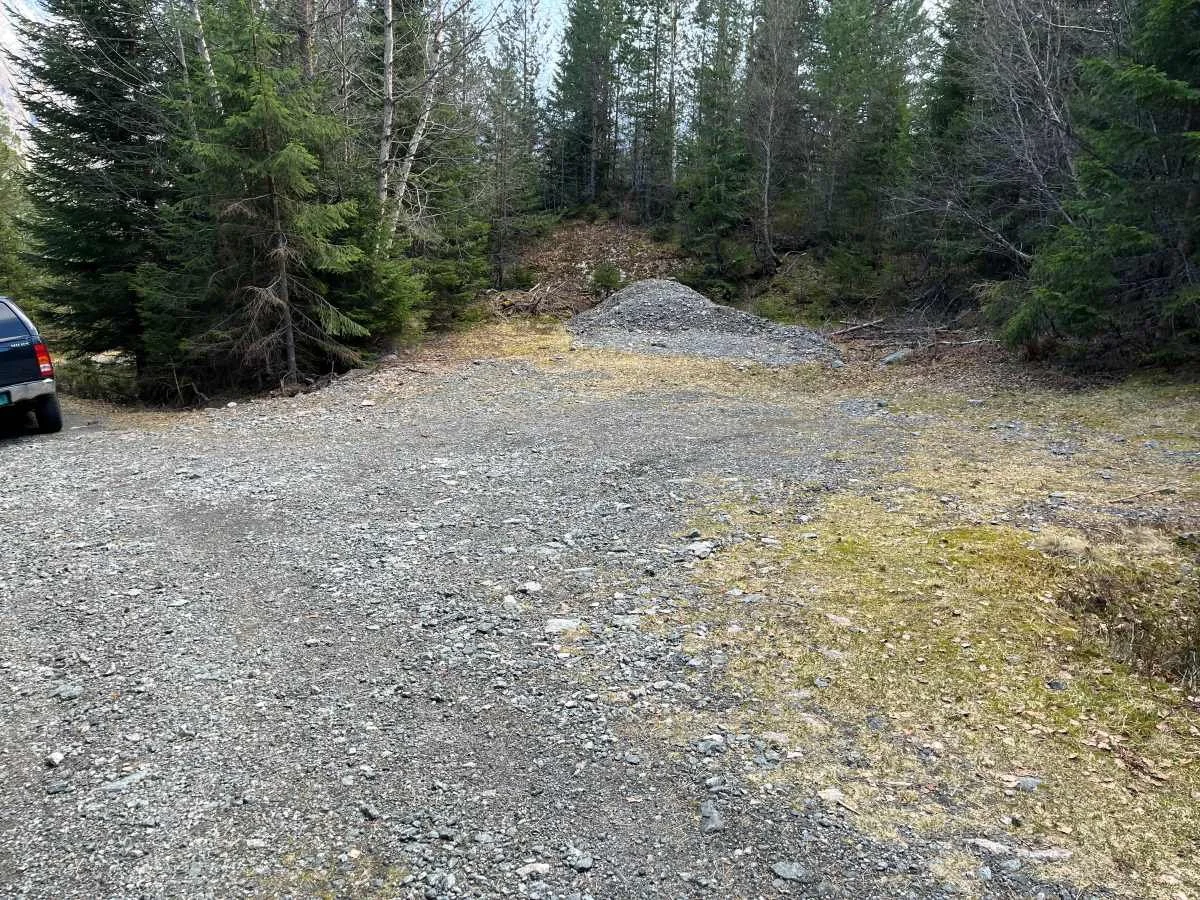
You can drive this far without four-wheel drive.
If you have four-wheel drive and good ground clearance, you can continue another 600 metres along the forest road. This will take you to the end of the road.
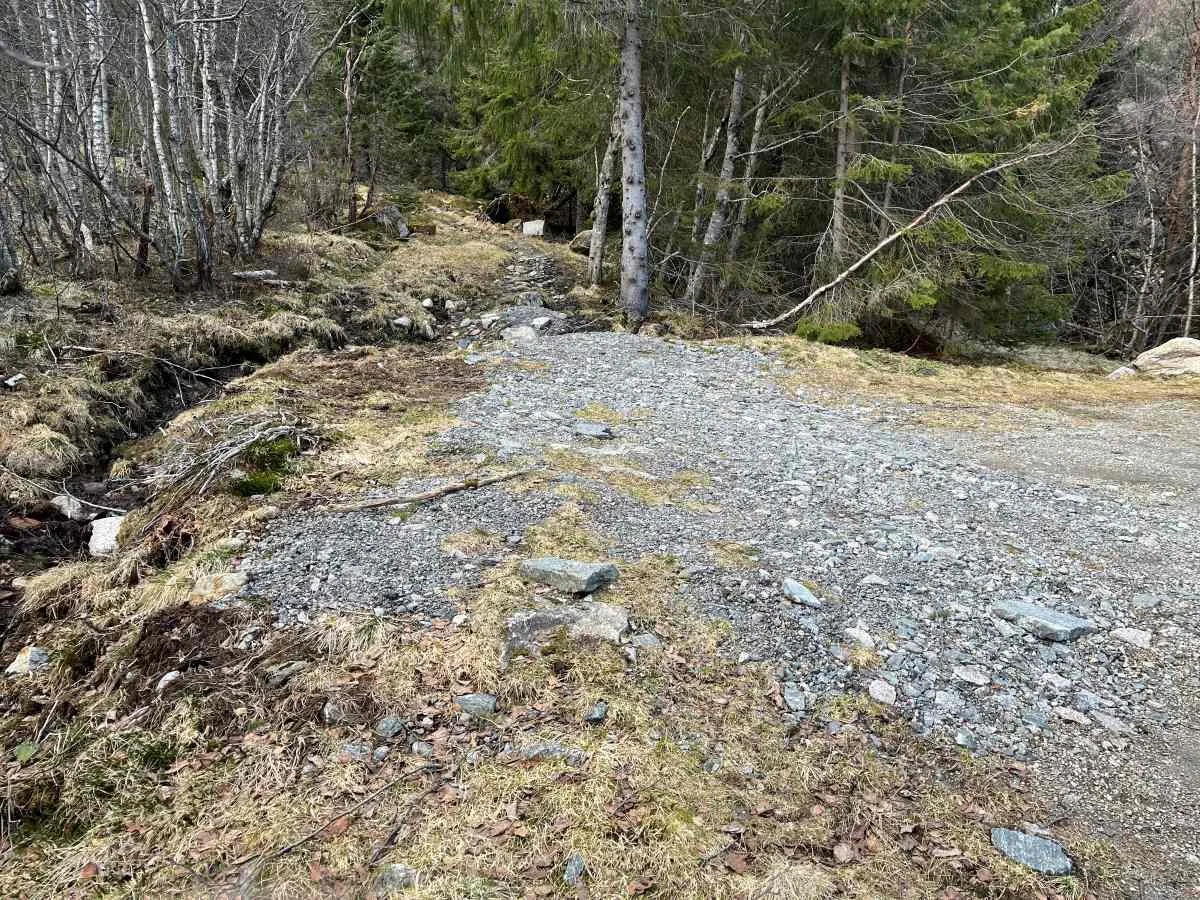
You can park at the end of the road if you have four-wheel drive.
It is not far to walk from the parking area before the landscape opens up and you get a magnificent view of Oppstrynsvatnet and the surrounding mountains.
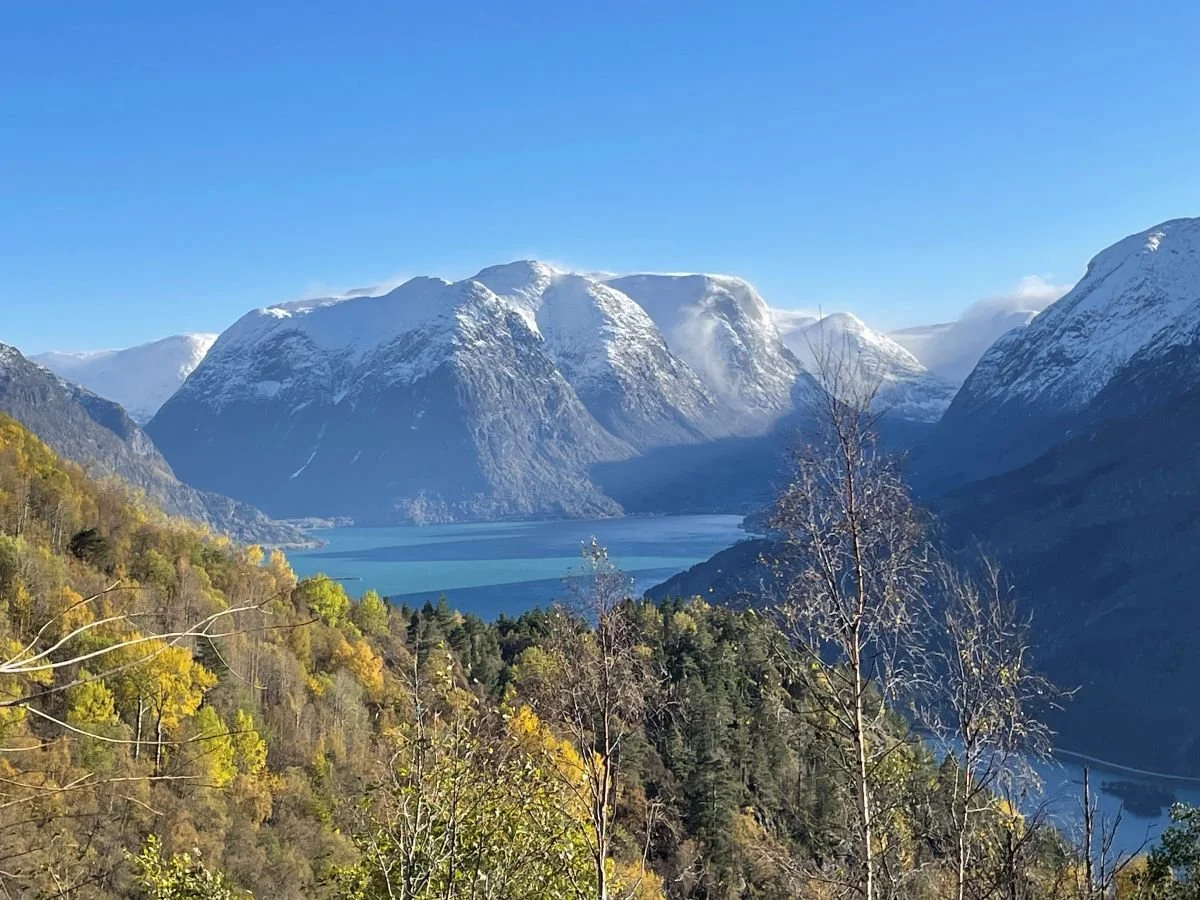
View from the steep Stemmebakken
After walking for a while (approximately 700 metres), you may notice a couple of large stones just above the trail. They are known as the Vedasteinane.
Firewood was once stacked here before being carried up to the summer farm. There was very little woodland around Furesetra — even less than today. It was also common to leave items here that were later carried to or from the summer farm.
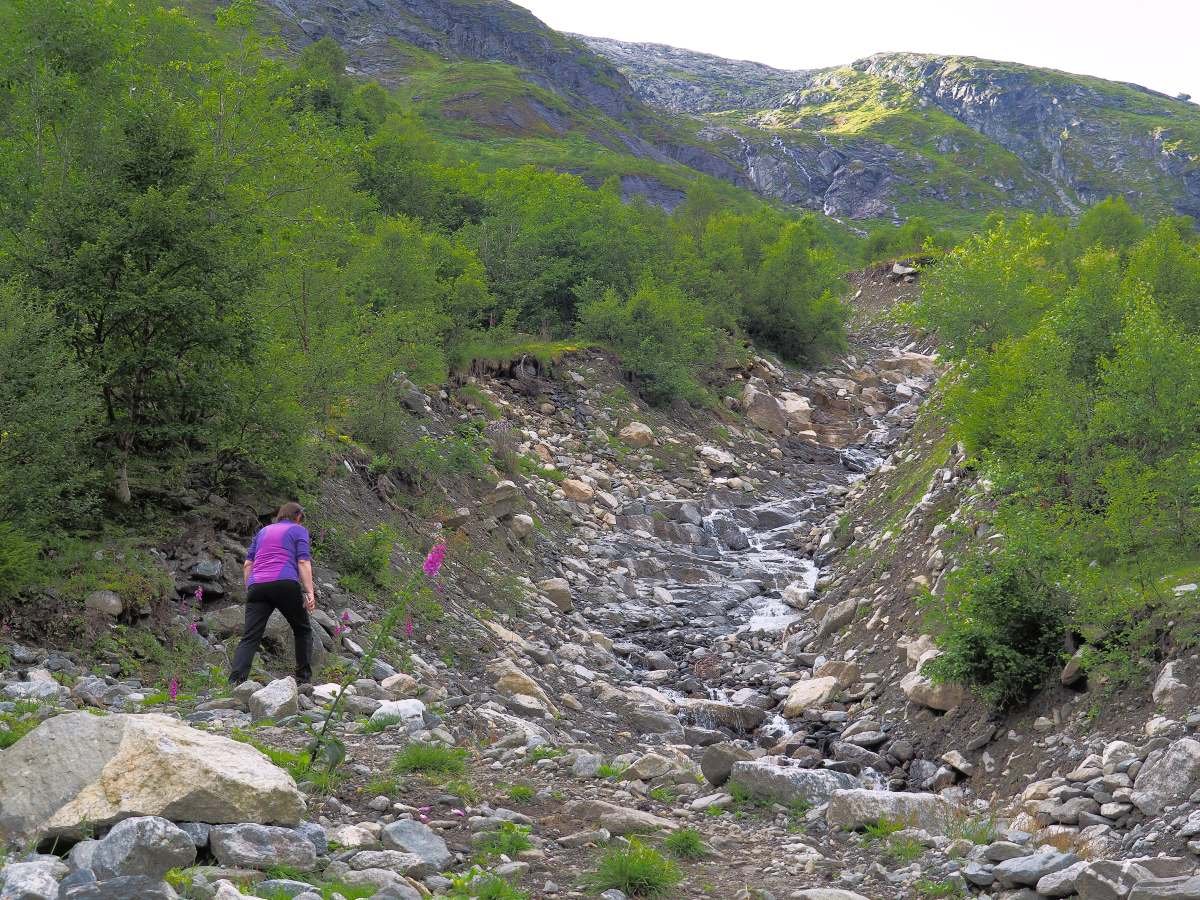
Grøsvorgrova
From Vedasteinane, it is only a short distance before you reach the crossing of Grøsvorgrova. As you can see, floodwater has carved a deep gully down the mountainside. Grøsvoregga (1,287 metres above sea level) can be seen up to the left in the picture.
At the exact spot where the summer farm trail crosses Grøsvorgrova, you can still see the remains of a stone wall known as Muren (“The Wall”). It was built to prevent the livestock from moving too early towards the summer farm. The wall was repaired every spring.
Just beyond Muren and Grøsvorgrova lies Vikasetra. The farmers from Lindvik milked their cows here before driving them further up to the summer farm.
Furesetra is situated 660 metres above sea level, and it was usually well into July before the grass had grown enough for the move to the summer farm. In addition, there was a considerable danger of avalanches in the valley.
Vikasetra was the last resting place for those carrying heavy loads up to the summer farm.
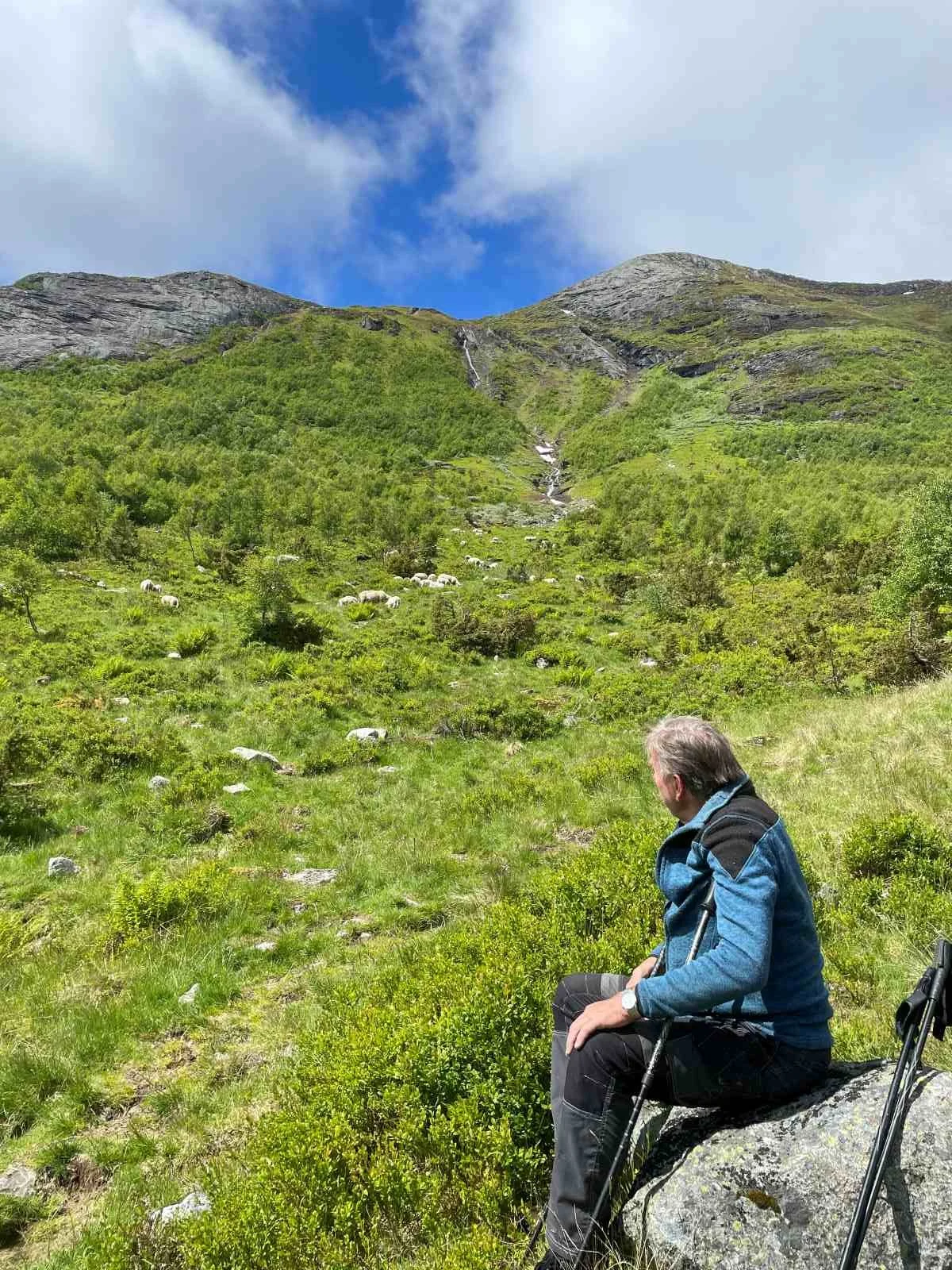
Vikasetra
Vikasetra is an avalanche-prone area. The resting stone shown in the picture is of more recent origin. The original resting place at Vikasetra was located about 50 metres further up the valley.
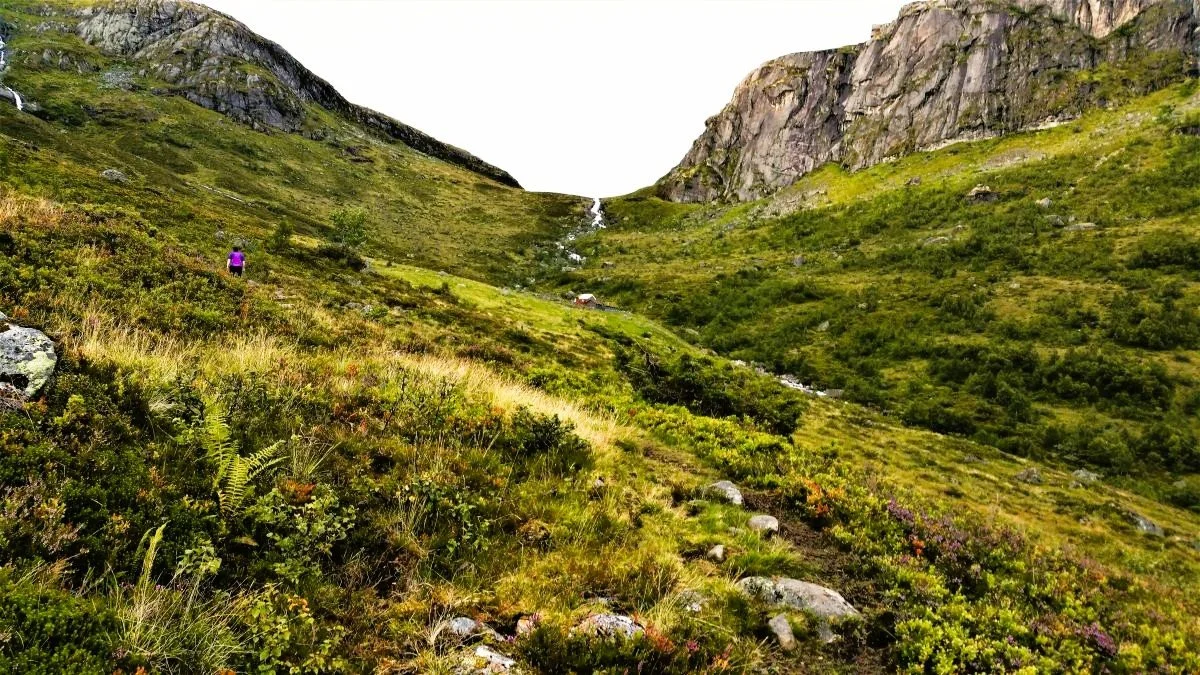
You are now approaching Furesetra, and the landscape begins to open up. Behind the mountain gap that you can see in the middle of the picture lies Heimste Botnevatnet. This is where the Fureelva begins its journey towards Oppstrynsvatnet.
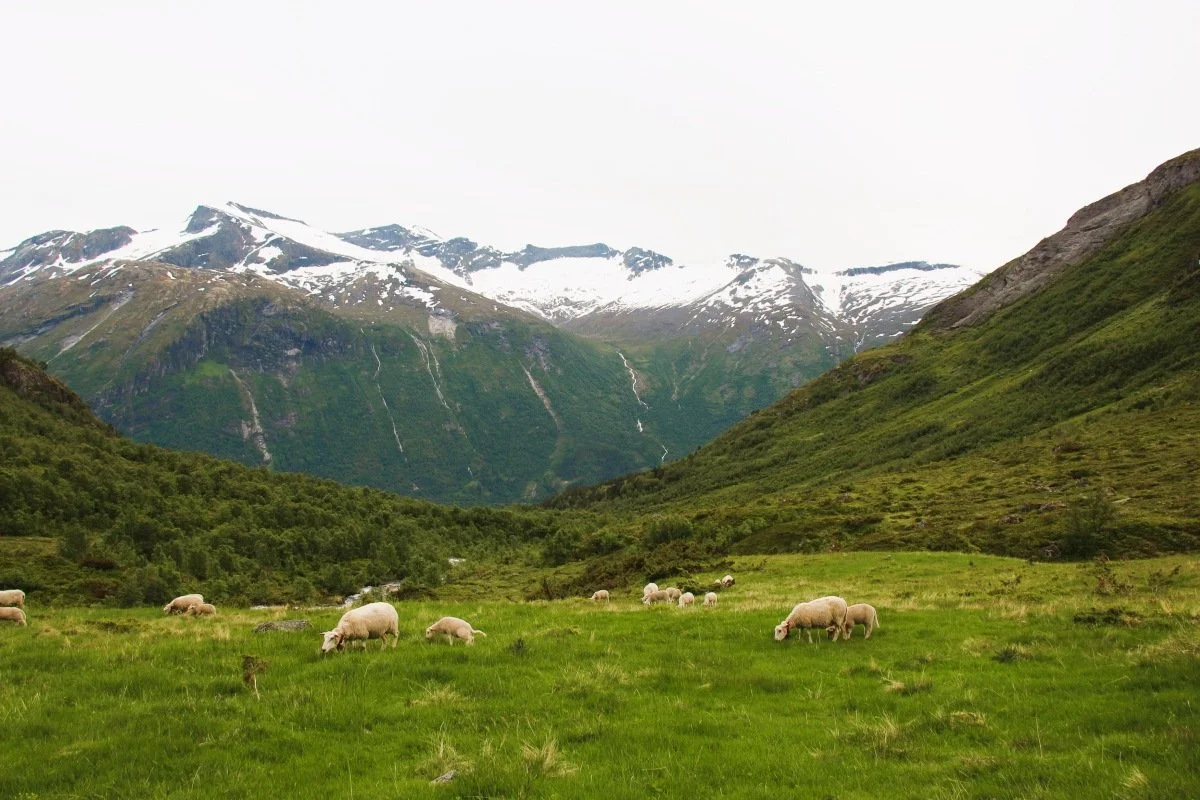
The summer pasture meadow at Furesetra
The summer pasture meadow at Furesetra lies as it has always done and provides good grazing for both sheep and cattle. Today, only one farmer still has cows grazing up here.
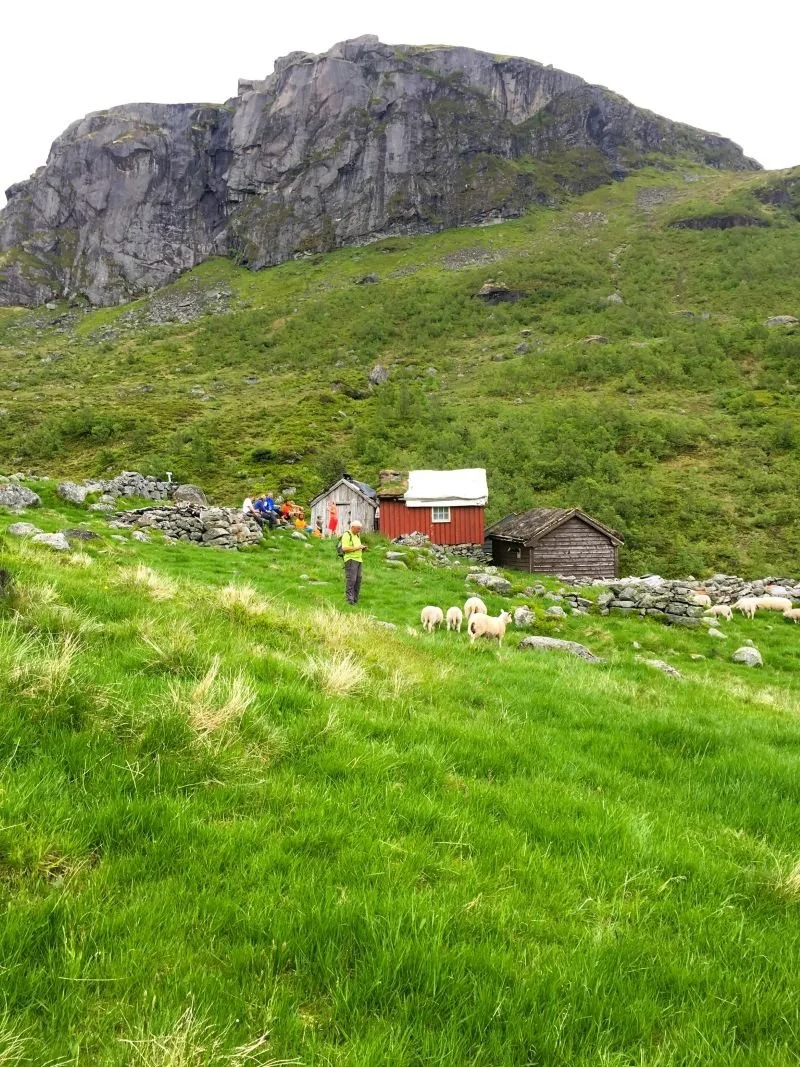
Furesetra
Furesetra is exposed to avalanche winds and storms. Almost all the summer farm cabins and barns that once stood here when the farm was in use, are now in ruins. The image shows the remains of where they were located. Today, only two cabins remain. Insurance companies no longer cover the damage caused by natural forces.
Furesetra på 1930-talet
Det var på den tid 8 sel og 9 fjøsar. Ein småbrukar hadde fjøs (Nesafjøsen), men ikkje sel. Dei mjølka kyrne til ein annan brukar og fekk nytte selet deira.
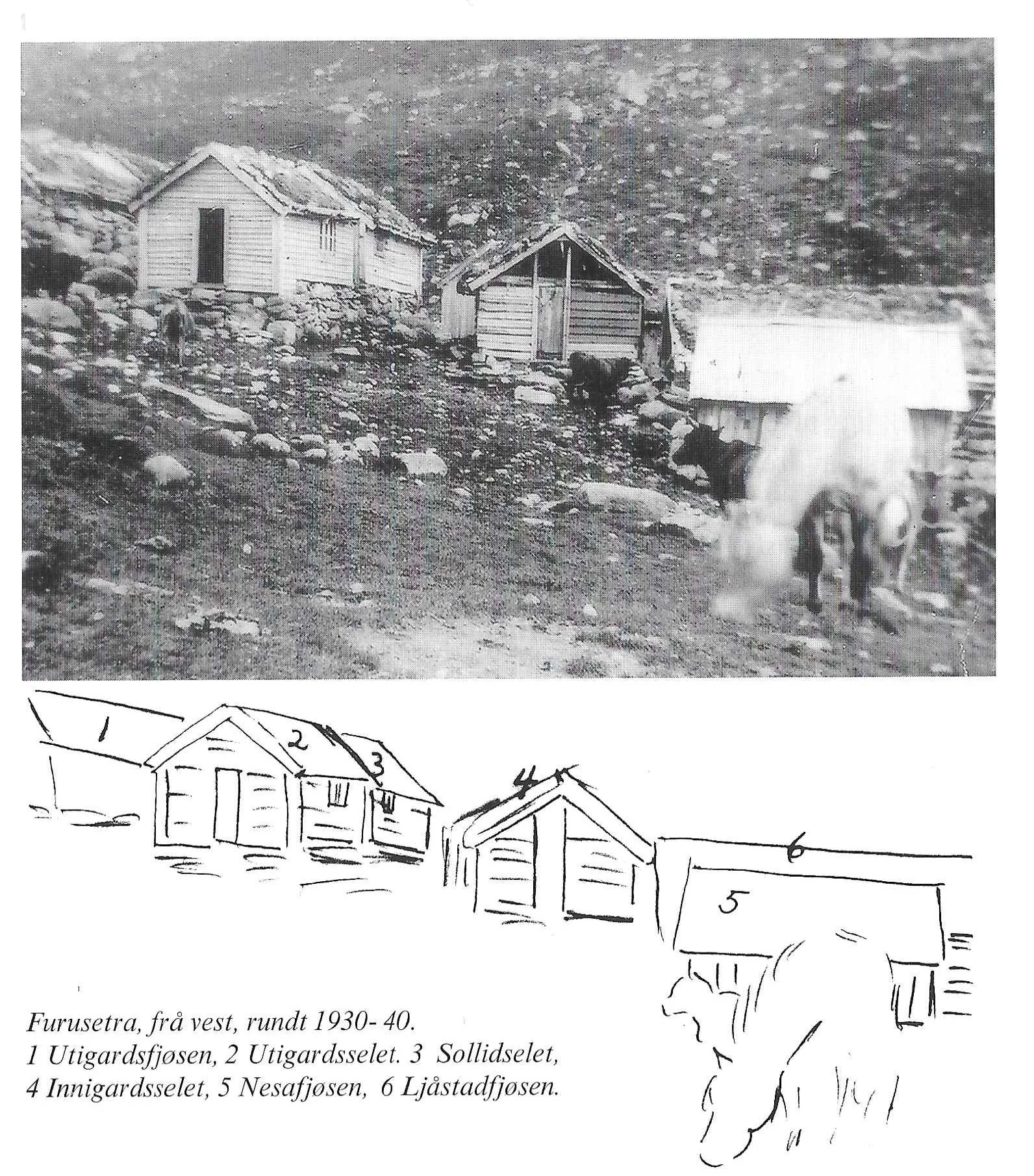
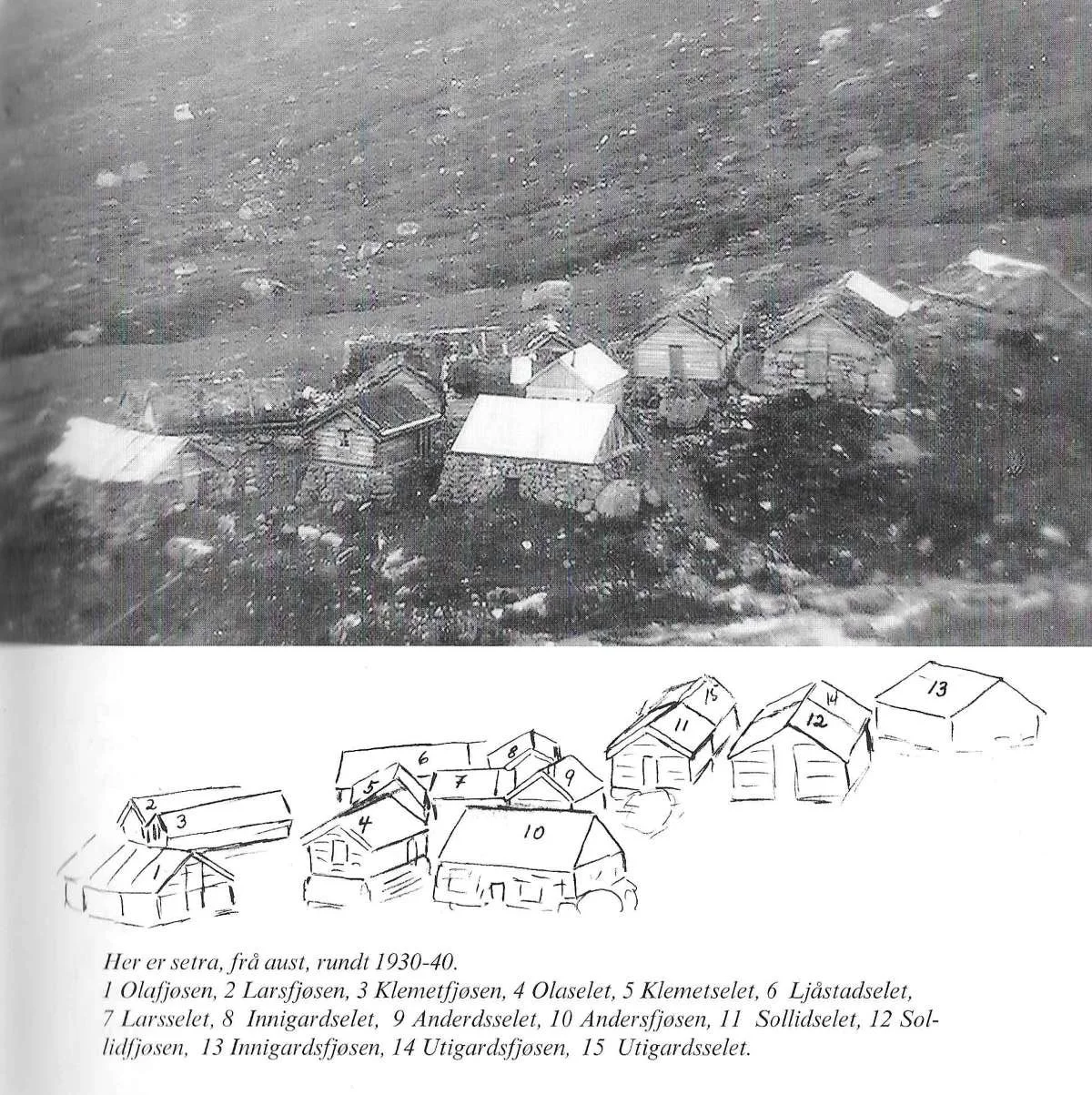
In the 1930s, all the summer farm cabins were in use. The working day was roughly the same as at the other summer farms in Oppstryn.
Kristian Lindvik, born in 1930, recounts in Kjell Råd’s book Setrar i Oppstryn og Nedstryn that he was only 12 years old when he and his 11-year-old brother worked as summer farm boys for the first time.
They would set off for the summer farm carrying a hylkje (container) on their backs at around five o’clock in the afternoon. It was a long walk, taking about one and a half hours. Once they arrived, they had to find the cows and get them into their stalls in the barn. They milked the cows and placed the milk for cooling.
After milking, there might be time for some conversation and a game of cards in one of the cabins. But they had to go to bed early. Already at five o’clock in the morning, they were woken up. An adult was responsible for waking them.
They went to the barn, milked the morning yield, let the cows out to pasture, collected all the milk into the hylkje (container), and started the walk home with the container on their backs. After a good breakfast at home, they had to join the others in fieldwork.
When it was about five o’clock in the afternoon, it was time to get ready for the walk back to the summer farm again.
By the late 1940s, no one was milking cows at Furesetra anymore.
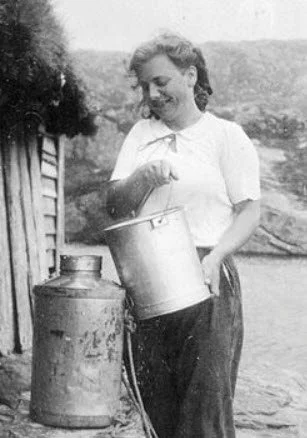
The image is sourced from the regional archives.
Matias Dispen was skilled at making lightweight and practical carrying containers (hylkje) from tinplate, which were easy and comfortable to carry on the back. As we can see, straps are attached to the container. Tinplate consists of thin sheets of tinned iron.
Heimste Botnevatnet
At Heimste Botnevatnet there were no summer farm buildings, but you can still see a walled enclosure, likely used for livestock.
In more recent years, four cabins have been built by the lake. It is an idyllic spot, and there are fish in both Heimste- and Fremste Botnevatnet.
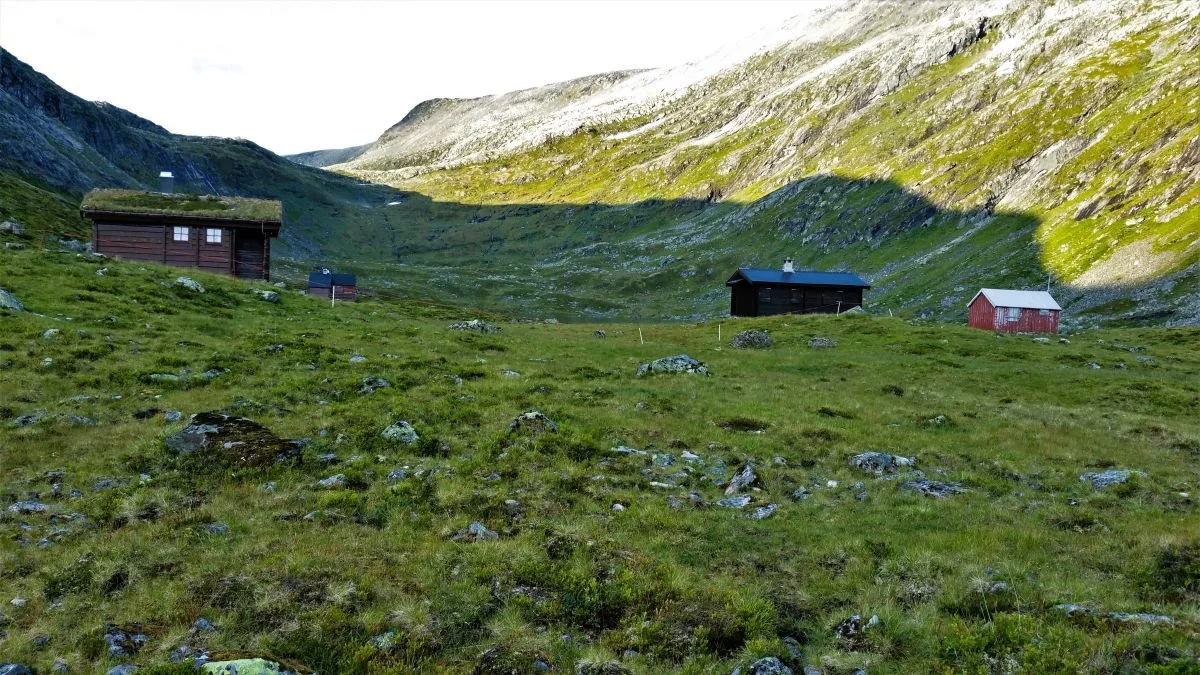
The owners of the cabins at Heimste Botnevatnet, from left, are: Geir Ove Lindvik, Arve Lindvik, Leif Ljåstad, and Birger Ljåstad.
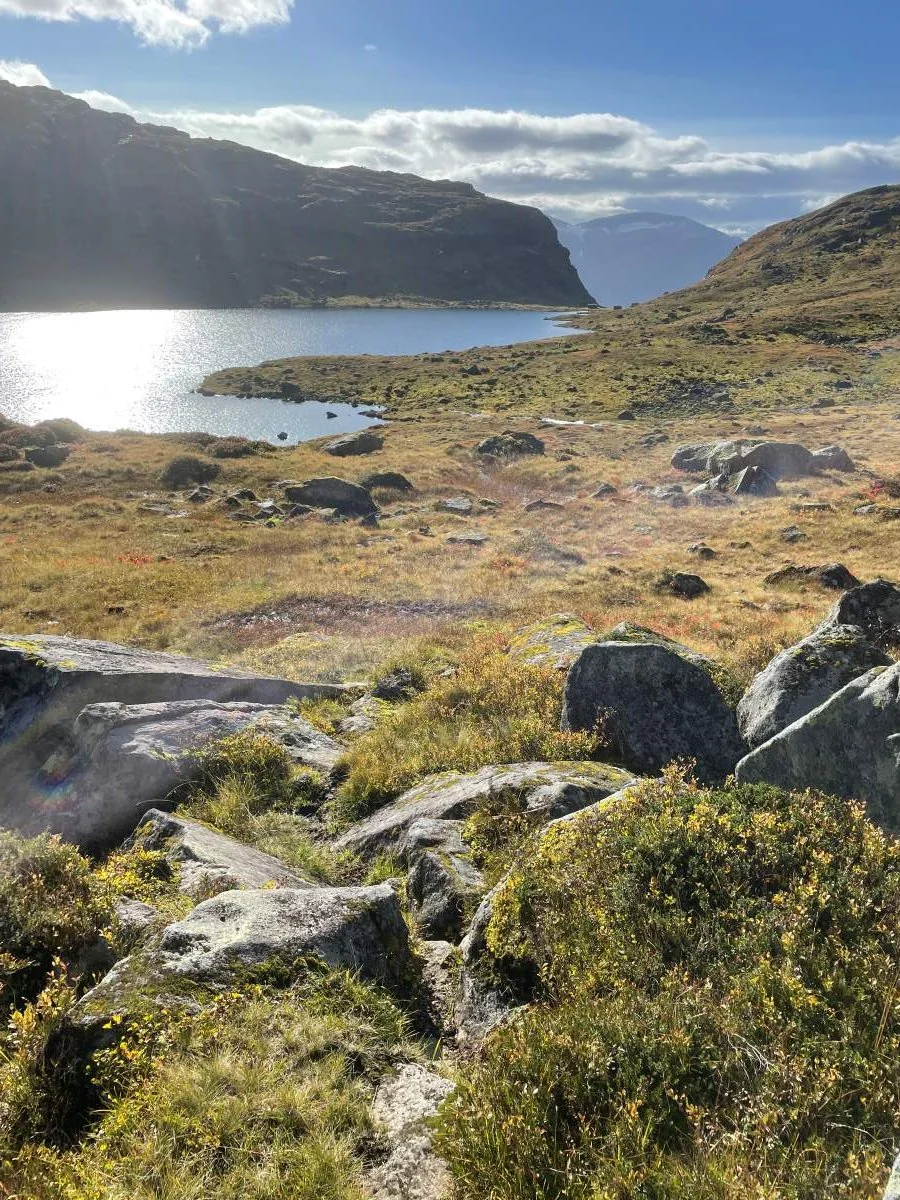
Heimste Botnevatnet – looking towards Strynedalen
It is pleasant to walk along Heimste Botnevatnet. A clear trail follows the western side of the lake. Further up towards Fremste Botnevatnet, there is no marked trail, but it is not difficult to find your way.
If you still have the energy, you are welcome to continue on to Fremste Botnevatnet.
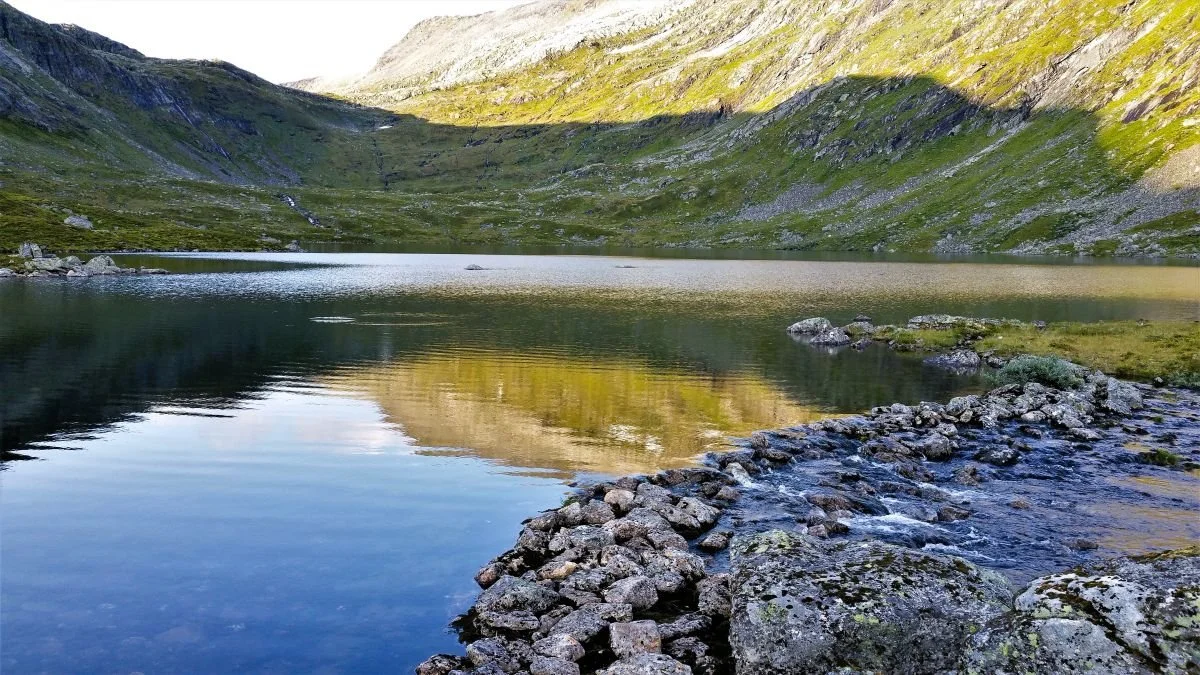
At the outlet of the Fureelva (river), rocks have been placed to reduce the risk of fish being carried downstream by the current. This also provides a reasonably dry crossing to the other side.
This is the usual route to the popular summit of Marsåhyrna.
Text: Asbjørn Berge, 2026
Photos: Asbjørn Berge and Anne Karin Fure