


Hike to Heimste Botnevatnet
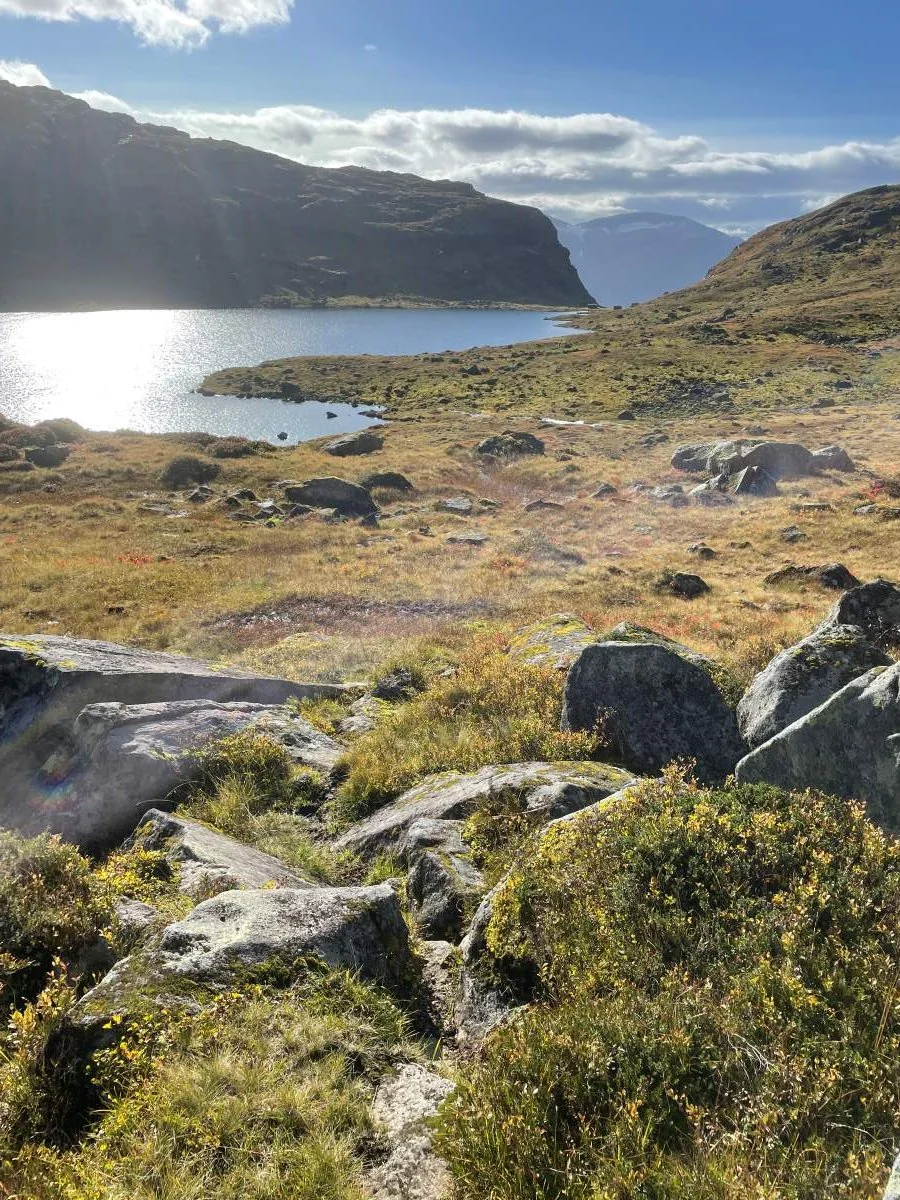
Heimste Botnevatnet
Heimste Botnevatnet is located at the far end of Furedalen. It is a picturesque mountain lake situated at 841 metres above sea level. In recent years, a few cabins have been built, beautifully positioned at the innermost end of the lake.
On your way up Furedalen, you will pass Furesetra. Summer farming operations there were discontinued in 1947, but before that, the area was bustling with life every summer. Nine farmers used the summer farm.
Today, only a few mountain cabins remain, and just one farmer still has cattle grazing in the valley.
Difficulty: Moderate. The trail is easy to follow and in good condition.
Distance: 2.9 km one way from the end of the forest road to Heimste Botnevatnet.
2.0 km one way to Furesetra.
Elevation gain: 540 metres to Heimste Botnevatnet. 360 metres to the summer farm.
Duration: 4.5 hours round trip to Heimste Botnevatnet.
Season: Spring to autumn
Parking: You can park at the parking area at the end of the forest road.
Note: There is no mobile phone coverage on this hike.
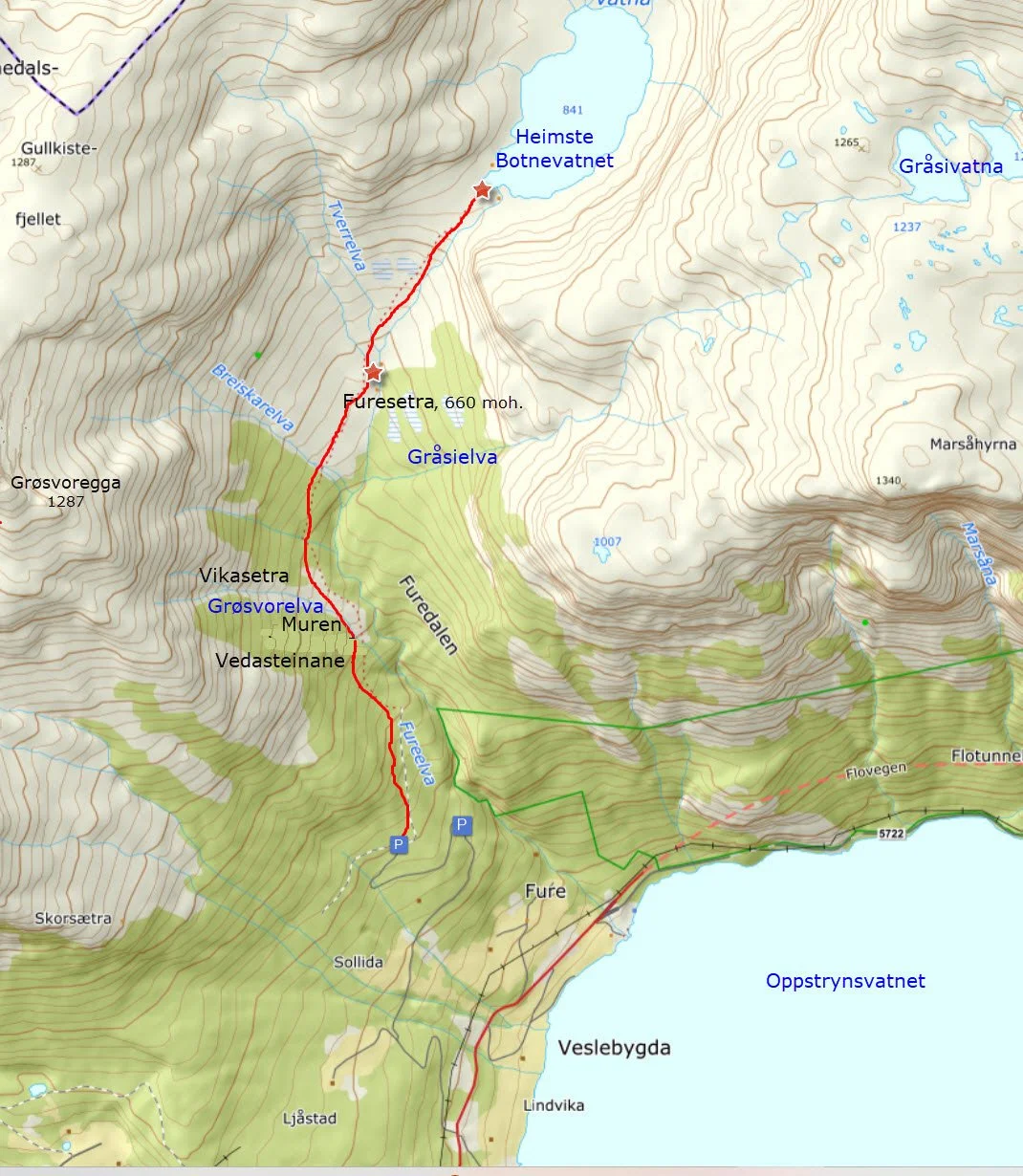
Route description
When you arrive by car in Veslebygda, turn off from Flovegen and follow the farm road to Sollid. From Sollid, you can continue along the forest road for about 600 metres uphill. You can park at the spot shown in the image below.
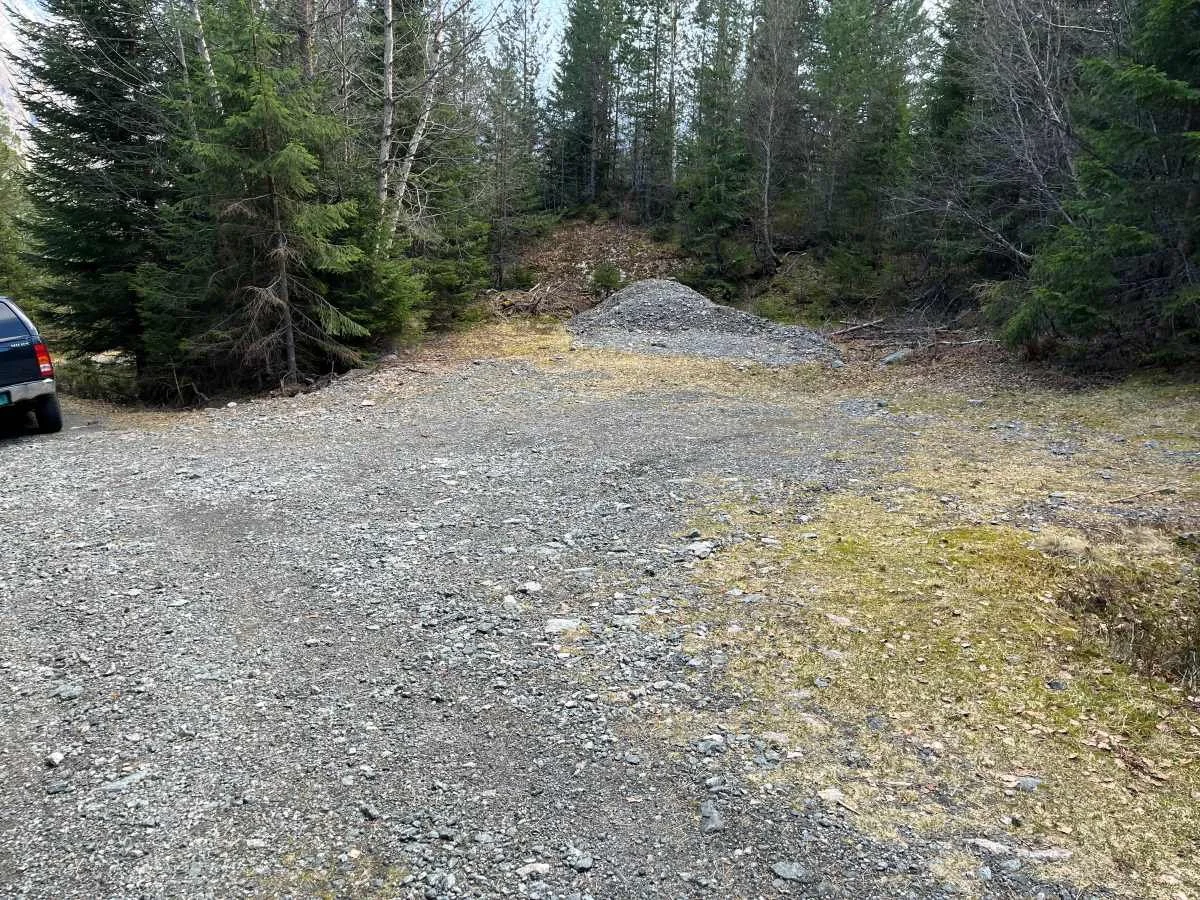
You can drive this far without four-wheel drive
If you have four-wheel drive and good ground clearance, you can continue another 600 metres along the forest road. This will take you to the end of the road.
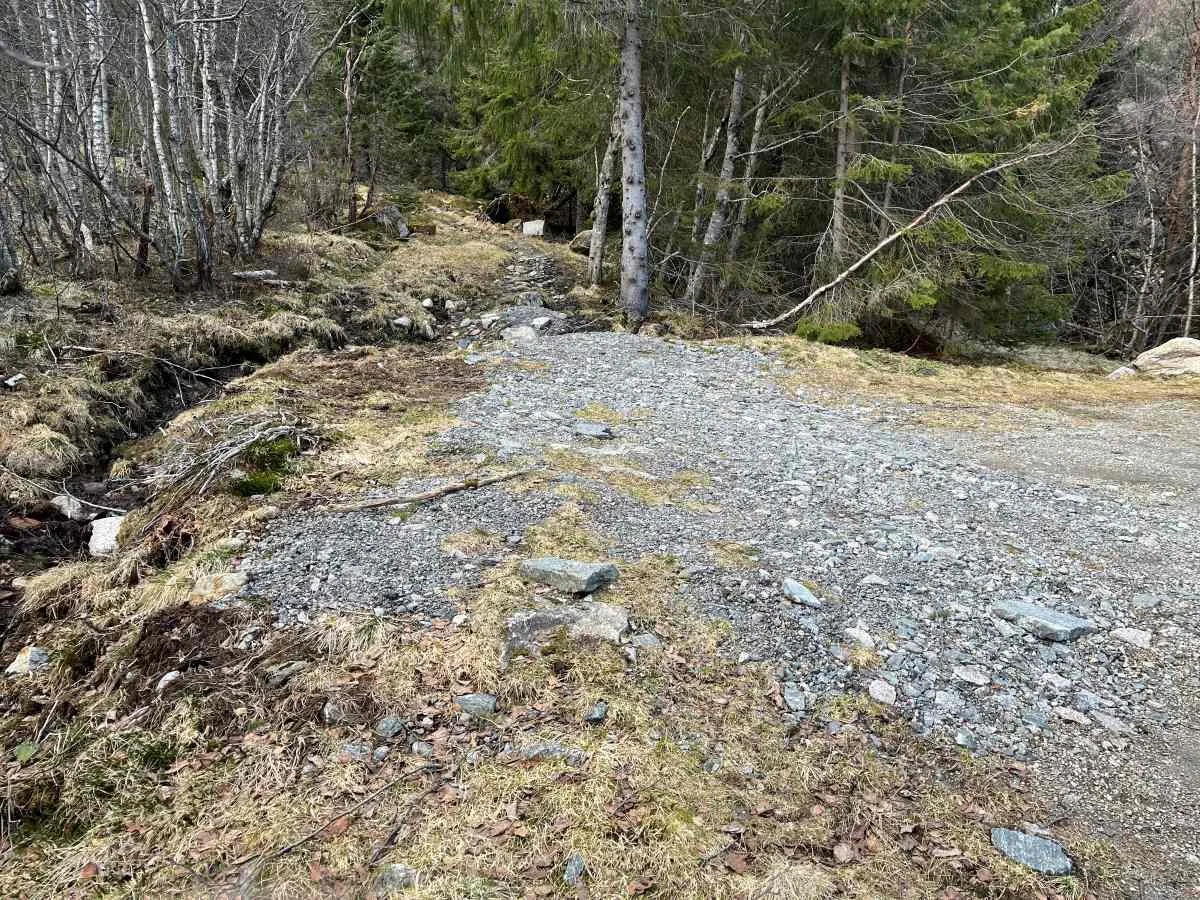
You can park at the end of the road if you have four-wheel drive
It is not far to walk from the parking area before the landscape opens up, offering a beautiful view of Oppstrynsvatnet (lake) and the surrounding mountains.
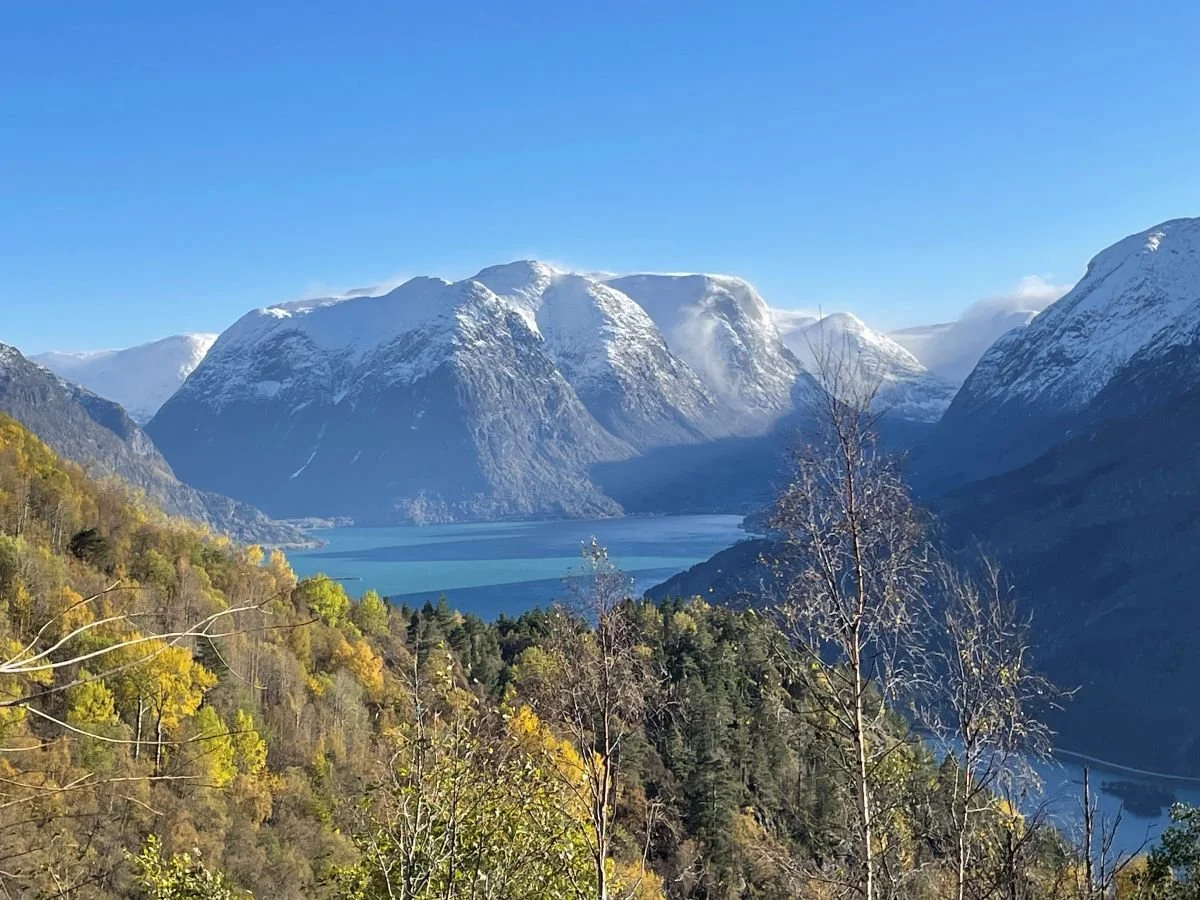
View from the steep Stemmebakken
After walking for a while (about 700 metres), you will notice a couple of large stones just above the trail. They are known as the Vedasteinane (“the wood stones”).
Here, firewood was stacked and stored before being carried up to the summer farm. There was very little woodland for firewood around Furesetra— even less than today. This spot was also commonly used to leave items that were later carried to or from the summer farm.
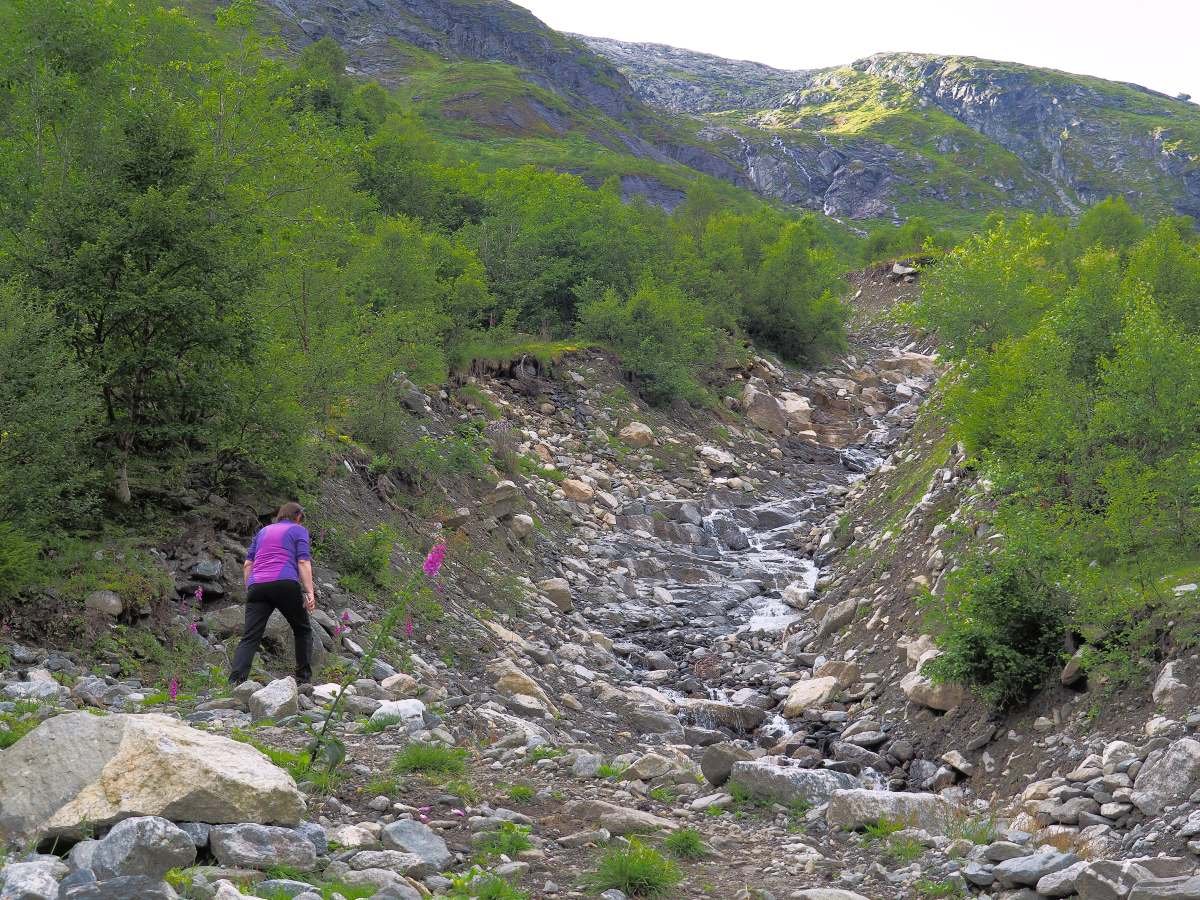
Grøsvorgrova
From Vedasteinane, it is only a short distance before you reach the crossing of Grøsvorgrova. As you can see, floodwater has carved a deep gully down the mountainside. Grøsvoregga (1,287 metres above sea level) rises up to the left in the picture.
Right here, where the summer farm trail crosses Grøsvorgrova, you can see the remains of a stone wall, known as Muren (“the Wall”). Its purpose was to prevent the livestock from moving too early toward the summer farm. The wall was repaired every spring.
Just ahead of Muren and Grøsvorgrova lies Vikasetra. Farmers from Lindvik used to milk their cows here before driving them further up to the summer farm.
Furesetra is located at 660 metres above sea level, and it was often well into July before the grass had grown enough to move the animals there. In addition, there was a significant risk of avalanches in the valley.
Vikasetra was also the last resting place for those carrying heavy loads on their way to the summer farm.
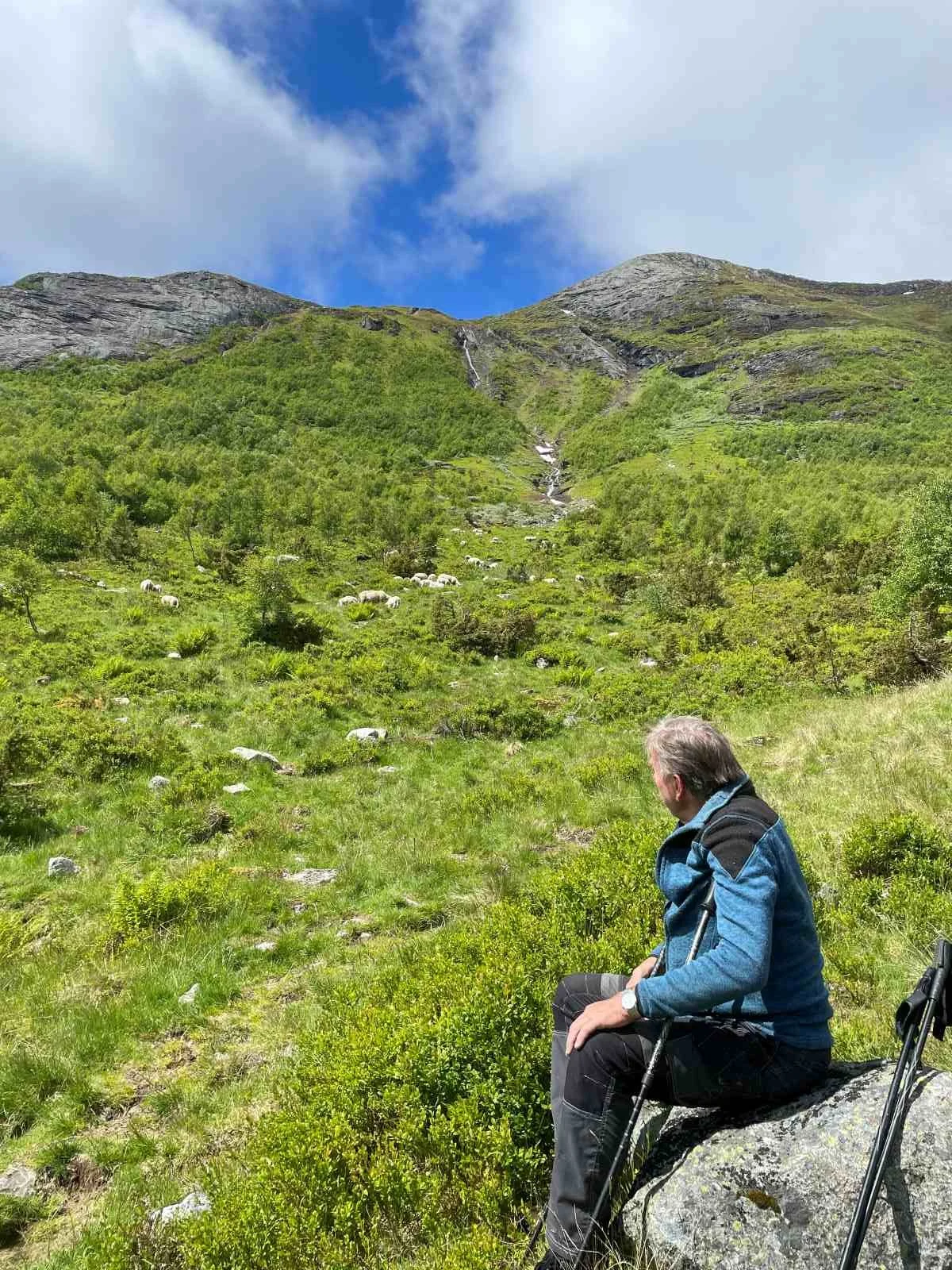
The resting place at Vikasetra
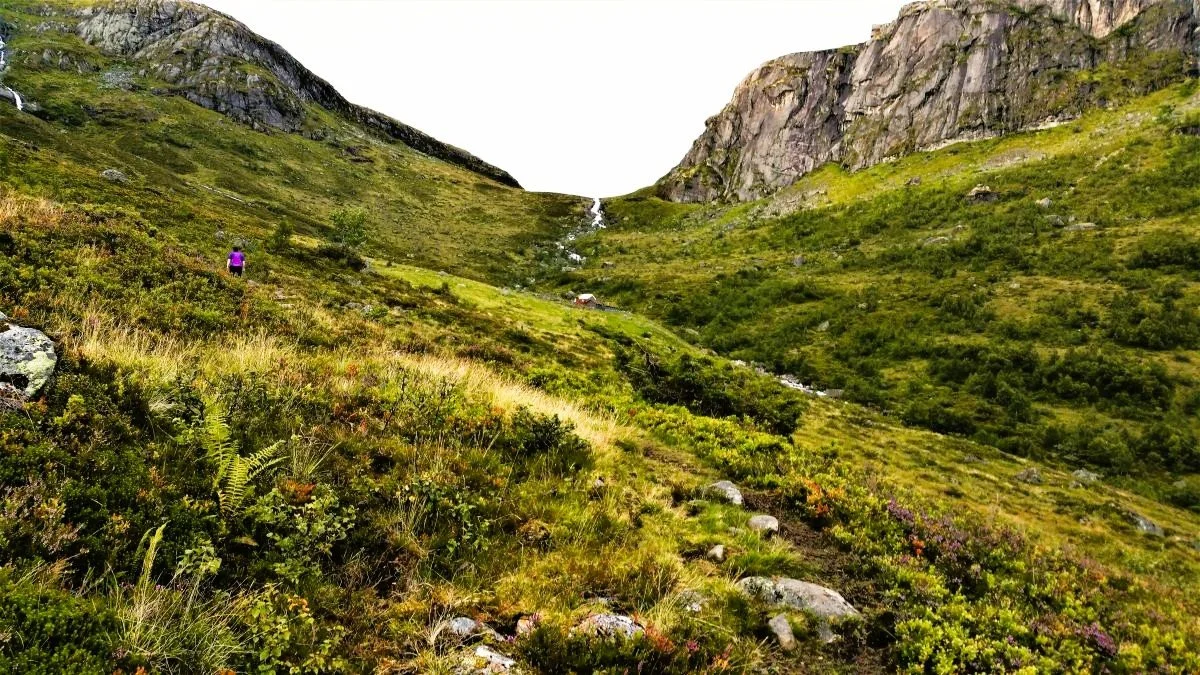
You are approaching Furesetra, and the landscape begins to open up. Behind the mountain pass you see in the centre of the image lies Heimste Botnevatnet. This is where the river Fureelva begins its journey towards Oppstrynsvatnet.
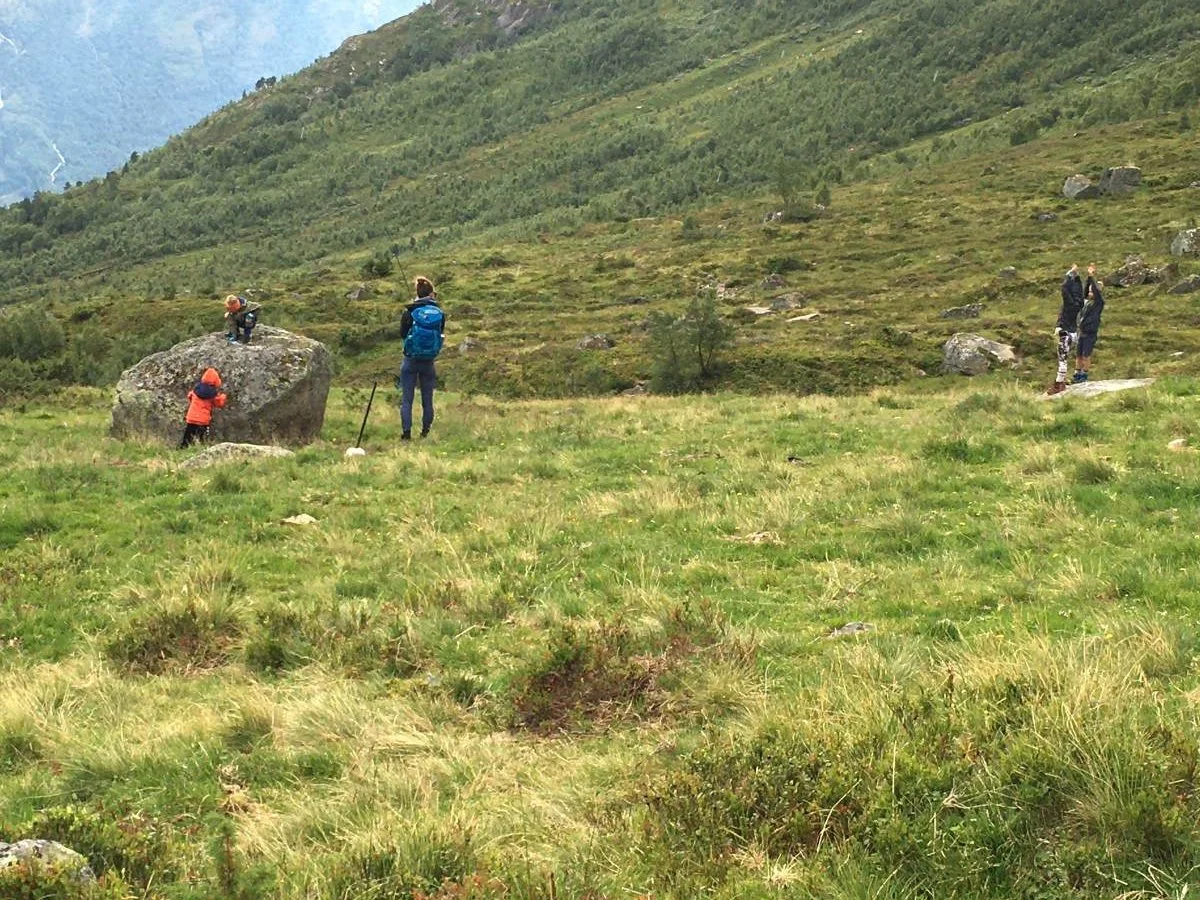
The summer farm meadow at Furesetra
The meadow remains much as it once was, but storms and avalanche winds have taken a heavy toll on the buildings. Of the eight cabins and nine barns that stood here when the summer farm was in operation, only a couple of buildings remain today.
Insurance companies will no longer cover damage caused by the forces of nature in this area.
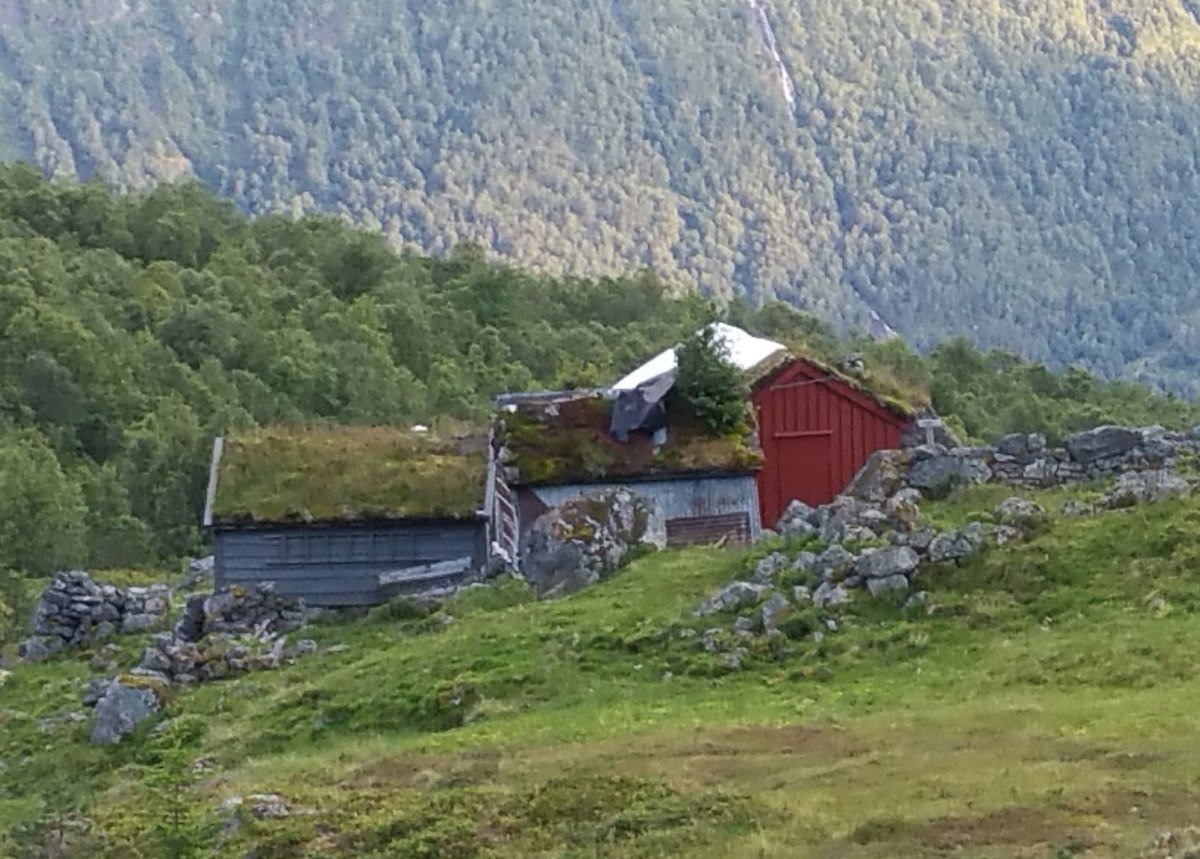
Since this photo was taken in 2017, the wind has destroyed two of these summer farm buildings
Furesetra in the 1930s
At that time, there were eight summer farm cabins (sel) and nine barns (fjøs). One smallholder had a barn (Nesafjøsen), but no cabin. He milked the cows belonging to another farmer and was allowed to use that farmer’s cabin.
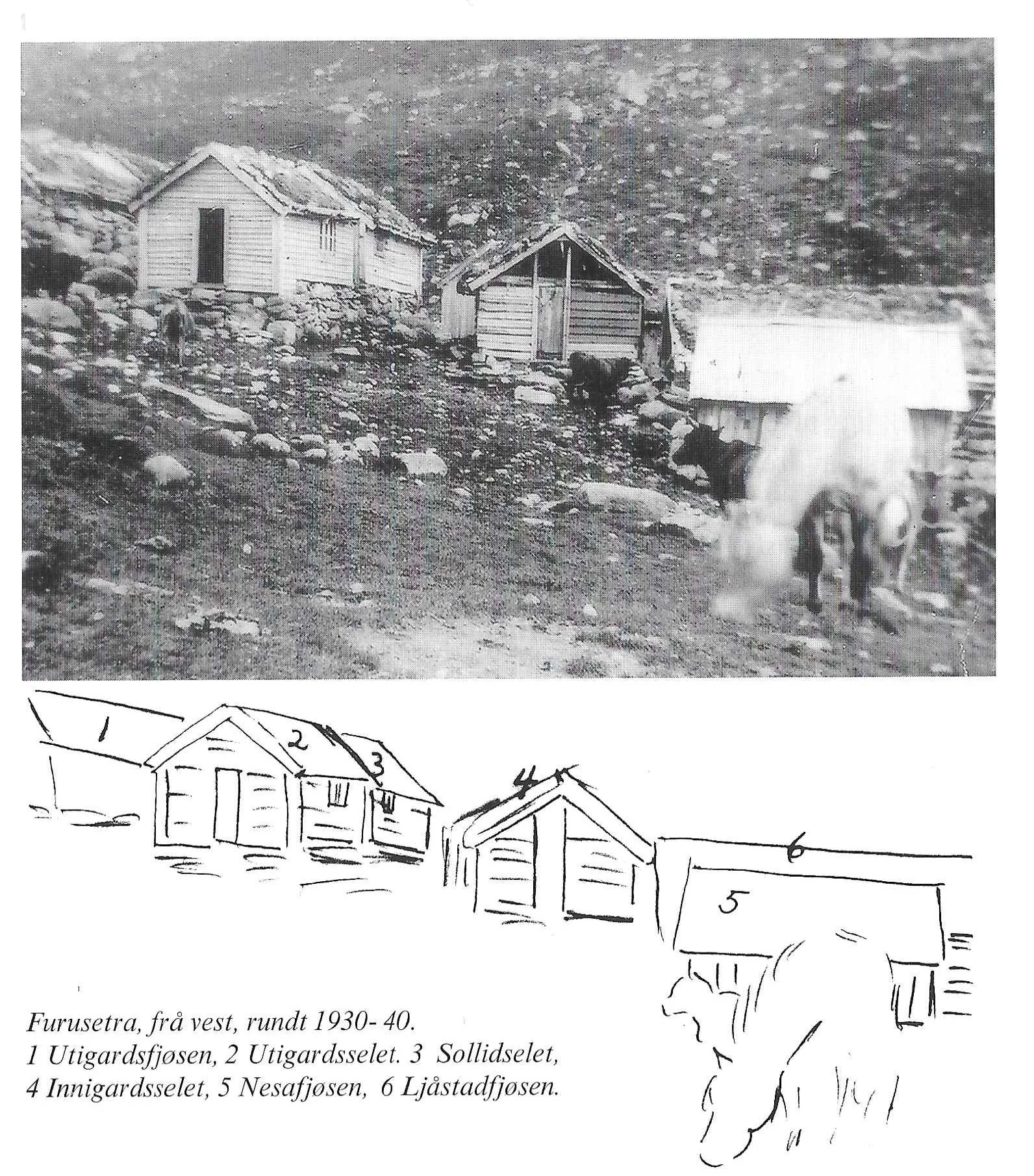
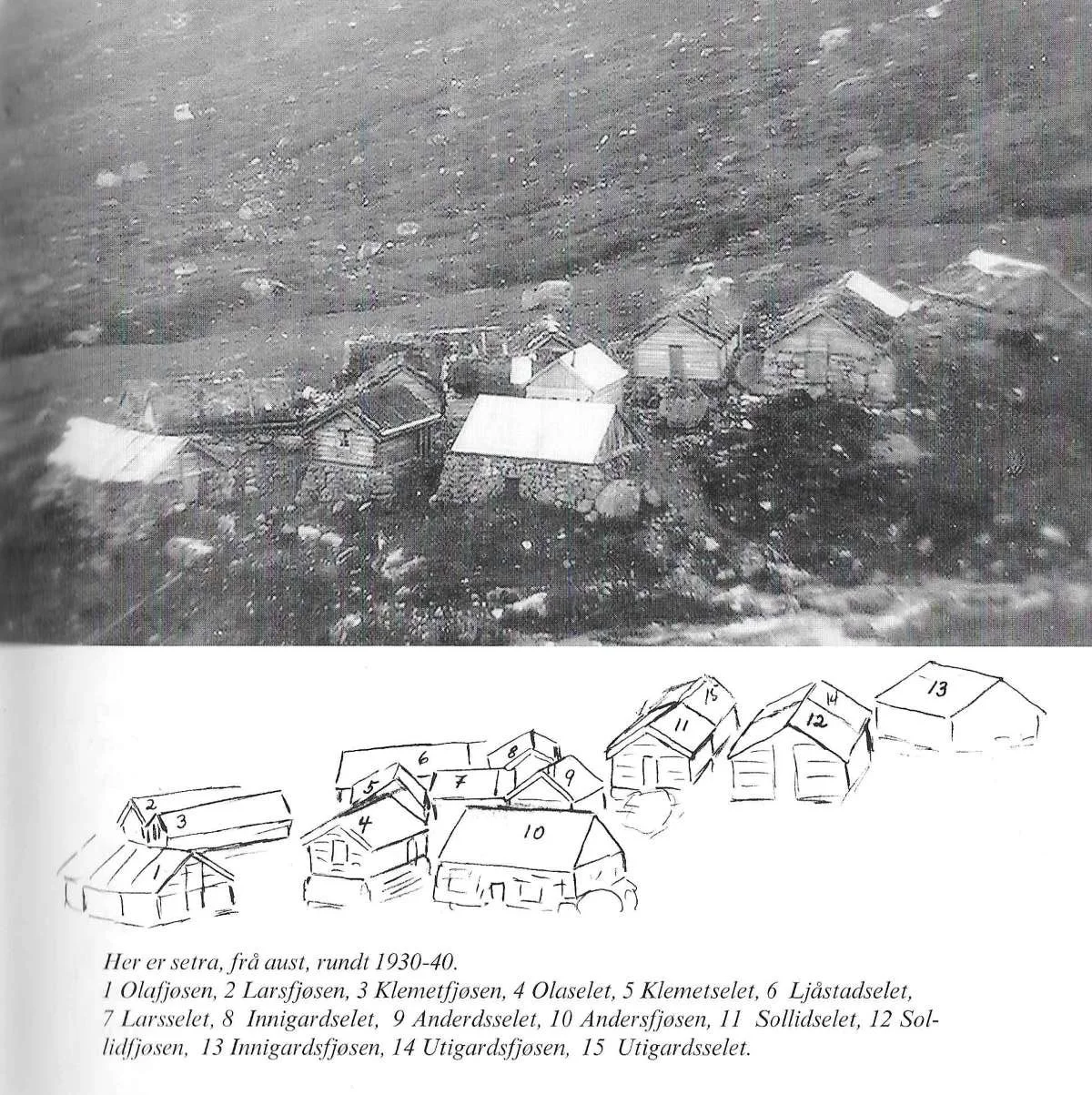
There were people in all the cabins at the summer farm (sela) in the 1930s. The workday was much like those at the other summer farms in Oppstryn.
Kristian Lindvik, born in 1930, tells in Kjell Råd’s book, Setrar i Oppstryn og Nedstryn, that he was only 12 years old when he and his 11-year-old brother served as mountain farm boys for the first summer. They walked to the farm carrying milk containers (hylkje) on their backs around five o'clock in the afternoon. It was a long walk; the trip took an hour and a half. Then they had to find the cows and put them in their stalls in the byre. They milked the cows and put the milk out to cool.
There might be time for some chatting and card games in one of the huts after milking, but they had to go to bed early. As early as five in the morning, they were woken up. An adult was responsible for the wake-up call. They went to the byre to do the morning milking, let the cows out to pasture, gathered all the milk in the container, and headed for home. After a good breakfast at home, they had to join the others working in the fields (vinja). As five o'clock in the afternoon approached, it was time to get ready for the trip back up to the mountain farm again.
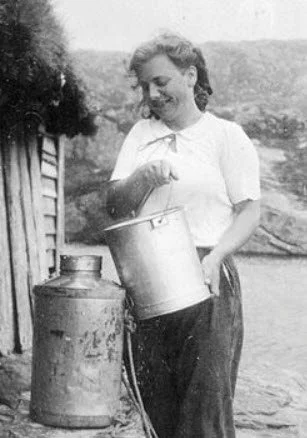
The photo is taken from the County Archives (fylkesarkivet)
Matias Dispen was skilled at making milk containers (hylkje) out of tinplate, which were lightweight and easy to carry on one's back. As we can see, straps (fatlar) are attached to the container. Tinplate (blekk) consisted of thin, tin-coated iron plates.
By the end of the 1940s, there was no one milking cows at Furesetra anymore.
By the lake Heimste Botnevatnet, there were no farm huts, but one can see a stone-walled enclosure, likely for animals.
In later years, four cabins have been built by this lake. It is an idyllic spot, and there is fish to be caught in both Heimste- and Fremste Botnevatnet.
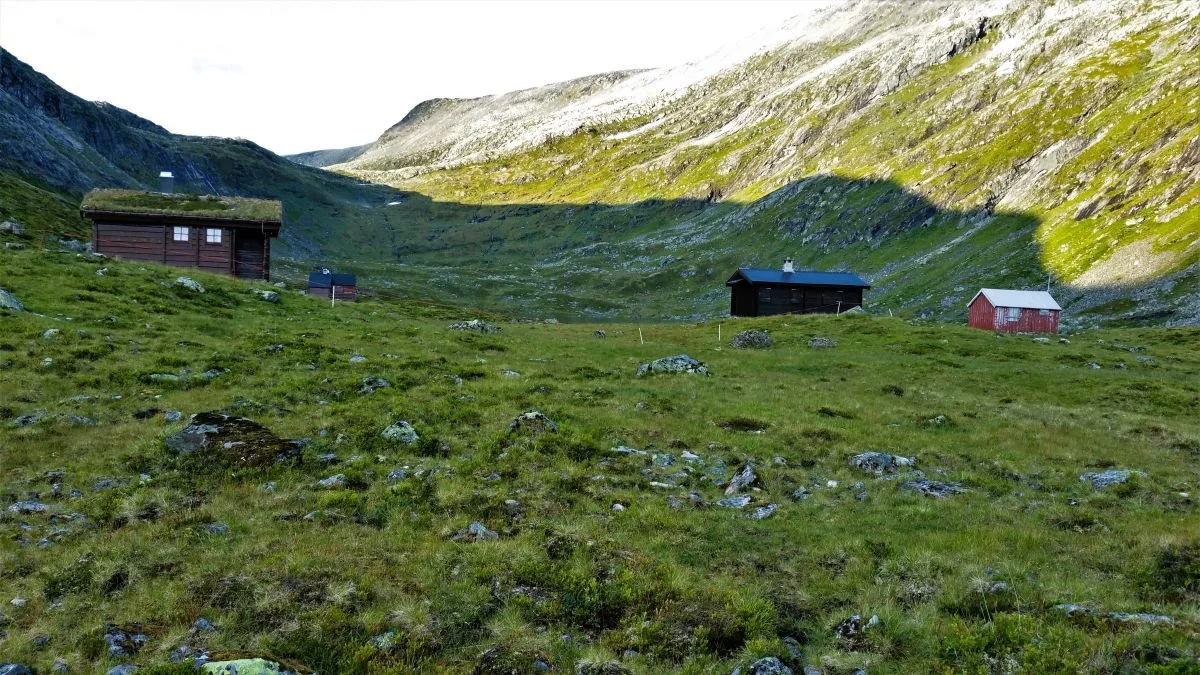
The owners of the cabins at Heimste Botnevatnet are, from left to right: Geir Ove Lindvik, Arve Lindvik, Leif Ljåstad, and Birger Ljåstad.
A clear path continues inward along the west side of Heimste Botnevatnet. If you still have energy left, you are more than welcome to continue the hike to Fremste Botnevatnet.
It is a lovely walk along Heimste Botnevatnet
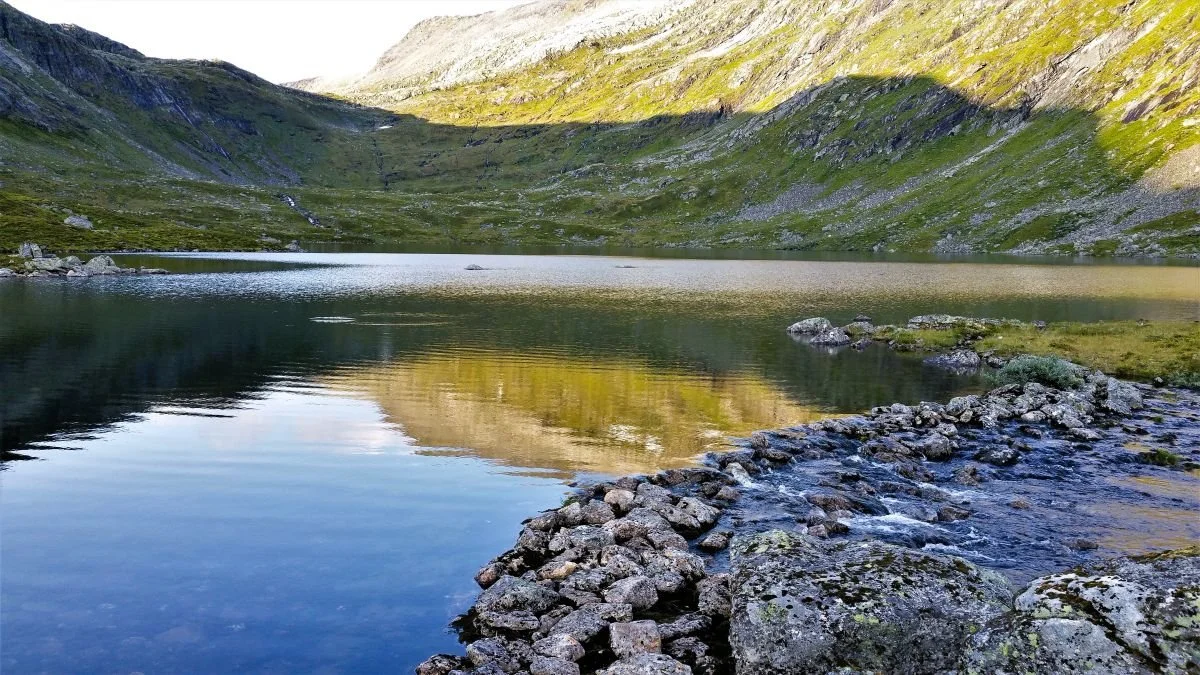
At the outlet of the Fureelva (river), stones have been laid out so that you can cross over to the other side of Heimste Botnevatnet. From here, it is common to continue the hike towards the popular peak, Marsåhyrna.
Text: Asbjørn Berge, 2026
Photos: Asbjørn Berge and Anne Karin Fure